Anglican-Roman Catholic Dialogue ~ IARCCUM.org
Online resource centre for Anglican-Roman Catholic relations
• 2026
• 2025
• 2024
• 2023
• 2022
• 2021
• 2020
• 2019
• 2018
• 2017
• 2016
• 2015
• 2014
• 2013
• 2012
• 2011
• 2010
• 2009
• 2008
• 2007
• 2006
• 2005
• 2004
• 2003
• 2002
• 2001
• 2000
• 1999
• 1998
• 1997
• 1996
• 1967
• 1966
 We invite you to visit our Bluesky feed, a new social media platform that replaces Twitter/X. Bluesky has reintroduced content moderation and eliminated advertizing. Follow us now on Bluesky.
A Call to Reconciliation: A Joint Document from ARCUSA (26 Feb 2026)
A paradigm shift for English Catholicism (11 Feb 2026)
Italy’s Christian churches sign first ecumenical pact (5 Feb 2026)
Sarah Mullally confirmed as 106th archbishop of Canterbury (28 Jan 2026)
My Journey to Full Communion with the See of Peter (14 Jan 2026)
News & Opinion
• 2026
• 2025
• 2024
• 2023
• 2022
• 2021
• 2020
• 2019
• 2018
• 2017
• 2016
• 2015
• 2014
• 2013
• 2012
• 2011
• 2010
• 2009
• 2008
• 2007
• 2006
• 2005
• 2004
• 2003
• 2002
• 2001
• 2000
• 1999
• 1998
• 1997
• 1996
• 1967
• 1966
October ~ 2025 ~ Anglican-Roman Catholic news & opinion
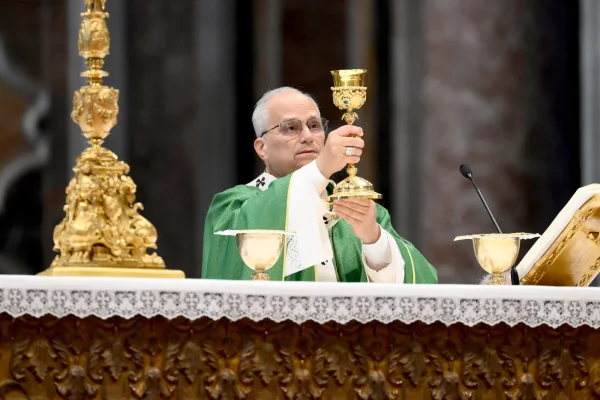
Brothers and Sisters,
As we celebrate the Jubilee of the Synodal Teams and Participatory Bodies, we are invited to contemplate and rediscover the mystery of the Church. She is not merely a religious institution, nor is she simply identified with hierarchies and structures. The Second Vatican Council reminds us that the Church is the visible sign of the union between God and humanity, where God intends to bring us all together into one family of brothers and sisters and make us his people: a people made up of beloved children, all united in the one embrace of his love.
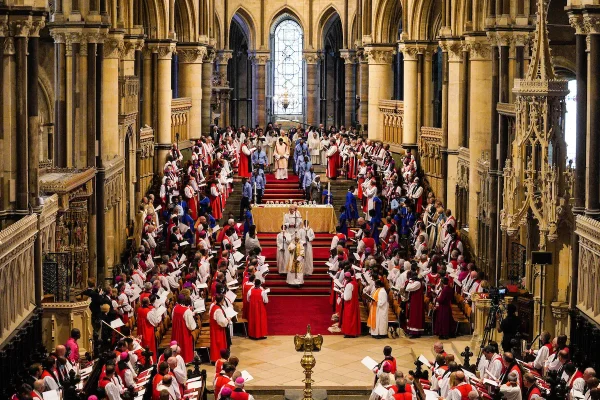
The GAFCON statement’s potential impact was evident as soon as it landed Oct. 16. It immediately provoked intense reactions in Anglican circles around the world.
The conservative Christian network, a mix of leaders from recognized Anglican provinces and breakaway groups, had announced that its primates, as the heads of their respective churches, were effectively leaving the Anglican Communion. They would reject the authority of the archbishop of Canterbury and no longer participate in, contribute to or receive assistance from the structures that have long bound together the Anglican Communion’s 42 autonomous, interdependent provinces.
The statement, titled “The Future Has Arrived,” accused senior leaders of the Anglican Communion of “the abandonment of the Scriptures” and said GAFCON’s member primates had “resolved to reorder the Anglican Communion.”
Perspectives on the visit of the British Royal Family to the Vatican by Archbishop Pace, secretary of the Pontifical Council for Christian Unity, and Bishop Ball, director of the Anglican Centre in Rome. The warmth and gestures that accompanied it “nurture our confidence in the path of dialogue and engagement with one another to which our churches remain wholeheartedly committed. We continue to hope, as Pope Leo has expressed it, for ‘the re-establishment of full and visible communion.’”
Four years after her death in 1603, the body of Queen Elizabeth I was moved and re-interred in the same grave as her half-sister, Queen Mary I (Tudor), in London’s Westminster Abbey. United by blood, the two were divided by religious affiliation. A series of Acts of Parliament between 1529 and 1536 had transferred all spiritual and canonical authority over the ‘ecclesia anglicana’ from the papacy to the crown. The 1534 Act of Supremacy declared their father, King Henry VIII, Supreme Head of the Church. This Supremacy was briefly repealed during the reign of the Catholic Mary, but was re-established during the reign of the Protestant Elizabeth.
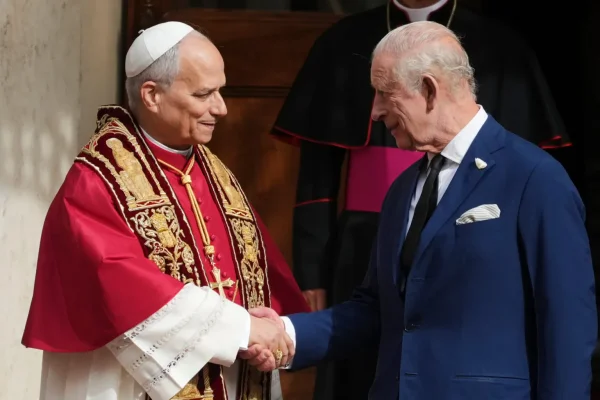
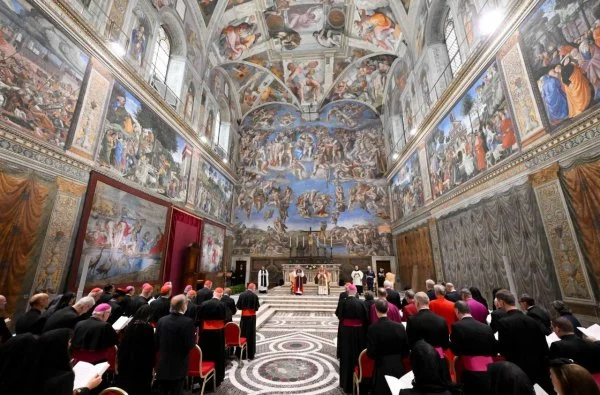
King Charles III and Queen Camilla of the United Kingdom were received in a private audience by Pope Leo XIV in the Vatican’s Apostolic Palace this morning, Oct. 23, during a state visit to the Holy See. Afterward, for the first time in history, a British monarch and a pope prayed together in the Sistine Chapel in an event of great ecumenical significance.
The royal couple arrived at the Vatican in a motorcade that drove through St. Peter’s Square and the Arch of the Bells and then to the San Damaso Courtyard of the Apostolic Palace. They were given a state welcome with a guard of honor provided by the Swiss Guard, as a band played the national anthems of the United Kingdom and Vatican City State. The regent of the papal household, Msgr. Leonardo Sapienza, then escorted them to the pope’s library, where they were welcomed by Pope Leo.
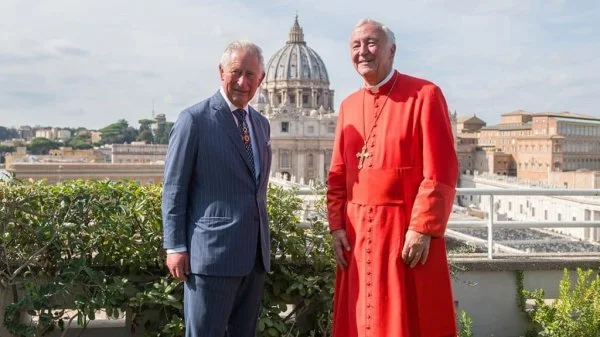
It is now 40 years since King Charles, as Prince of Wales, planned with the help of Vatican officials and the full support of Robert Runcie, who was then Archbishop of Canterbury, to attend a Roman Catholic mass celebrated by Pope John Paul II.
The heir to the throne was going to be in Rome with his wife, Diana, and the intention was that they would visit the Polish pope.
Runcie, who had hosted John Paul at Canterbury Cathedral for an ecumenical service three years earlier in 1982 during the Pope’s pastoral visit to Britain, was enthusiastic and believed the time was right for such an ecumenical gesture in the heart of Rome.
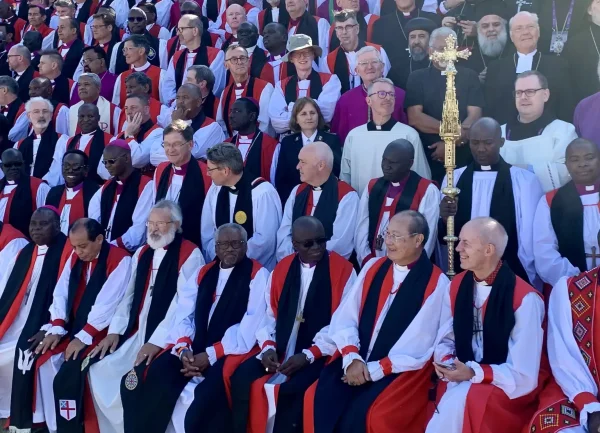
The conservative Anglican network GAFCON, a mix of leaders from Anglican provinces and breakaway groups, released a statement Oct. 16 saying it would disengage from the Anglican Communion’s existing deliberative bodies and create a rival to the Anglican Communion with an unspecified number of provinces.
The message, titled “The Future Has Arrived” and posted to GAFCON’s website, was signed only by Archbishop Laurent Mbanda of Rwanda, as chair of the network’s primates council, though Mbanda said he was issuing the statement after a meeting with other GAFCON primates about their path forward.
In it, Mbanda said the GAFCON primates have rejected the authority of the archbishop of Canterbury, the Anglican Consultative Council, the Lambeth Conference of Anglican bishops and the Primates’ Meeting, the four so-called “Instruments of Communion” by which the 42 autonomous provinces of the Anglican Communion maintain their interdependence. It also says the breakaway provinces “shall not make any monetary contribution to the ACC, nor receive any monetary contribution from the ACC or its networks.”
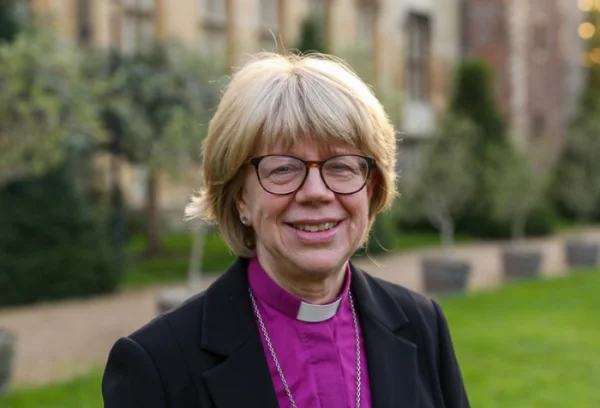
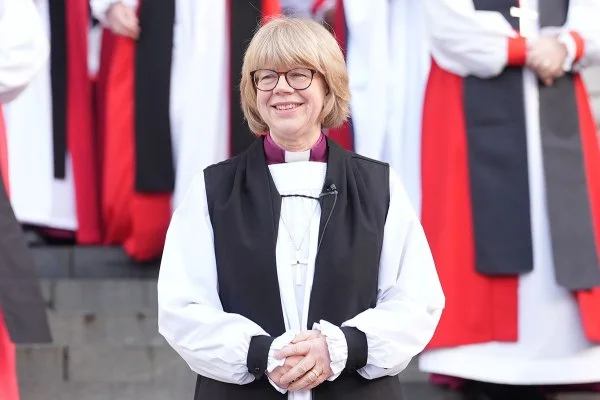
A message of joy and hope to the Anglican Communion from the next Archbishop of Canterbury – The Rt Revd and Rt Hon Dame Sarah Mullally DBE.
‘Dear sisters and brothers,
‘When I think about the Anglican Communion, I am filled with joy and hope. As a vibrant part of God’s universal church, it serves millions of Christians across the globe, spanning diverse cultures and traditions. I give thanks for the churches of the Anglican Communion and their faithful Christian presence in communities worldwide.
‘Through the deep bonds of friendship shared between the Provinces, I know that every day, Anglican churches strengthen one another in mission; stand alongside one another in times of adversity and speak out on matters of injustice and inequality.
His Majesty The King has approved the nomination of the Bishop of London, the Rt Revd and Rt Hon Dame Sarah Mullally, as the next Archbishop of Canterbury, Downing Street has announced.
The 106th Archbishop of Canterbury since Saint Augustine arrived in Kent from Rome in 597, Bishop Sarah will be the first woman to hold the office.
She will be installed in a service at Canterbury Cathedral in March 2026.
Sarah Mullally has been the Bishop of London since 2018, the first woman appointed to that role, and before that was Bishop of Crediton in the Diocese of Exeter. Prior to her ordination in 2001, she was the Government’s Chief Nursing Officer for England – the youngest person ever to be appointed to that role at the age of 37 – having previously specialised as a cancer nurse. Bishop Sarah has described nursing as ‘an opportunity to reflect the love of God’.