Anglican-Roman Catholic Dialogue ~ IARCCUM.org
Online resource centre for Anglican-Roman Catholic relations
• 2026
• 2025
• 2024
• 2023
• 2022
• 2021
• 2020
• 2019
• 2018
• 2017
• 2016
• 2015
• 2014
• 2013
• 2012
• 2011
• 2010
• 2009
• 2008
• 2007
• 2006
• 2005
• 2004
• 2003
• 2002
• 2001
• 2000
• 1999
• 1998
• 1997
• 1996
• 1967
• 1966
 We invite you to visit our Bluesky feed, a new social media platform that replaces Twitter/X. Bluesky has reintroduced content moderation and eliminated advertizing. Follow us now on Bluesky.
Belgian bishop plans to ordain married men to fulfil Synod vision (21 Mar 2026)
A Call to Reconciliation: A Joint Document from ARCUSA (26 Feb 2026)
A paradigm shift for English Catholicism (11 Feb 2026)
Italy’s Christian churches sign first ecumenical pact (5 Feb 2026)
Sarah Mullally confirmed as 106th archbishop of Canterbury (28 Jan 2026)
News & Opinion
• 2026
• 2025
• 2024
• 2023
• 2022
• 2021
• 2020
• 2019
• 2018
• 2017
• 2016
• 2015
• 2014
• 2013
• 2012
• 2011
• 2010
• 2009
• 2008
• 2007
• 2006
• 2005
• 2004
• 2003
• 2002
• 2001
• 2000
• 1999
• 1998
• 1997
• 1996
• 1967
• 1966
Anglican-Roman Catholic news & opinion
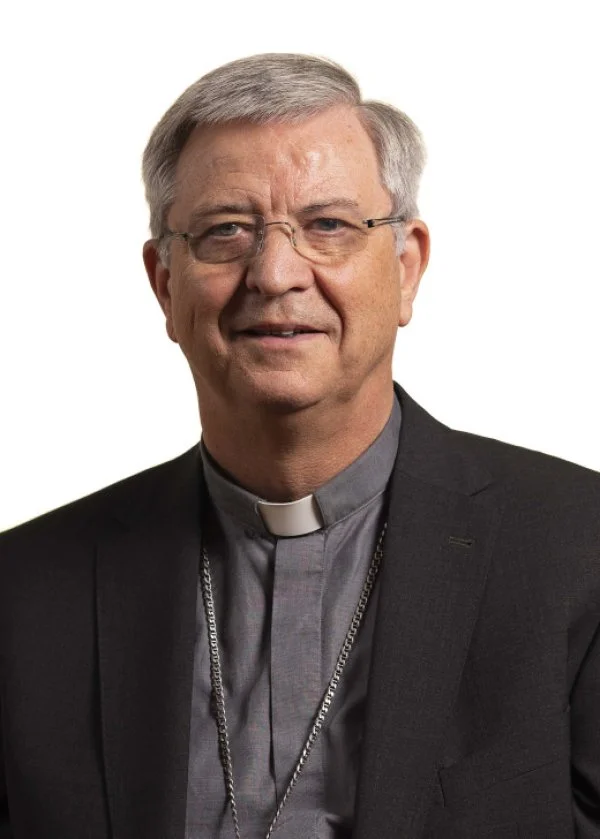
Bishop Johan Bonny of Antwerp has challenged Rome to push forward with synodal reforms by announcing changes including the ordination of married men in his diocese by 2028.
Carefully quoting guidelines for the Synod on Synodality’s implementation phase (2025-2028), his 11-page pastoral letter proposed the viri probati reform alongside the naming of woman pastors, a new understanding of parishes, welcoming new Catholics and updating the Church’s message.
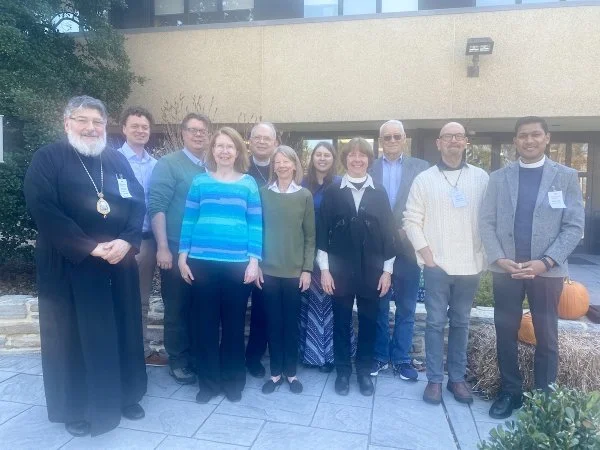
The 89th meeting of the Anglican-Roman Catholic Theological Consultation in the United States of America (ARCUSA) met at the Bon Secours Retreat and Conference Center in Marriottsville, Maryland, from Nov. 8-10, hosted by the secretariat for Ecumenical and Interreligious Affairs of the United States Conference of Catholic Bishops.
Against a background of communal worship, participants finalised a draft of a document on reconciliation, tentatively titled, “A Call to Reconciliation: A Joint Document from the Anglican-Roman Catholic USA Dialogue.” All members participated in a careful review of the entire document, providing final additions and edits. A final draft of this document on reconciliation will be presented in 2024 for approval by the General Convention of The Episcopal Church and the United States Conference of Catholic Bishops.
In addition, members participated in a liturgy of reconciliation intended for use as a rite for Episcopalians and Catholics. This liturgy is intended to be an appendix to the document as a sign of a common commitment to the ongoing work of reconciliation between Episcopalians and Catholics.
What is the Catholic Church in England and Wales for, exactly? Some might insist existence is enough and no more needs to be said. When the Catholic Church taught extra ecclesiam nulla salus without qualification, that was clearly an imperative. But the Catechism now states: “Those who, through no fault of their own, do not know the Gospel of Christ or his Church, but who nevertheless seek God with a sincere heart, and, moved by grace, try in their actions to do his will as they know it through the dictates of their conscience – those too may achieve eternal salvation” (quoting Lumen Gentium, 16). Paradise is open to all people of sincere goodwill. So why be Catholic? It is not a question that has yet been fully answered.
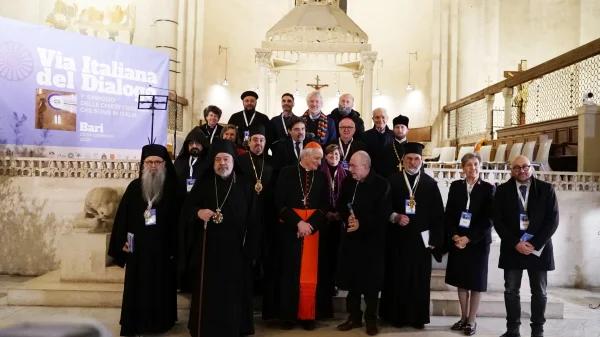
Strengthening relations among different Christian churches in Italy, while promoting authentic Christian values within an increasingly secular society. Those were the twin goals of a recent symposium, during which representatives of eighteen churches and Christian communities signed an ecumenical pact pledging to pursue dialogue, joint witness and closer cooperation for the common good.
As dean of the Evangelical Lutheran Church in Italy, Rev. Carsten Gerdes took part in the two-day symposium, held in the southern port city of Bari. The gathering included the signing of a bold new agreement between Catholic, Orthodox, Anglican, Protestant, Pentecostal and Free churches present around the Italian peninsula.
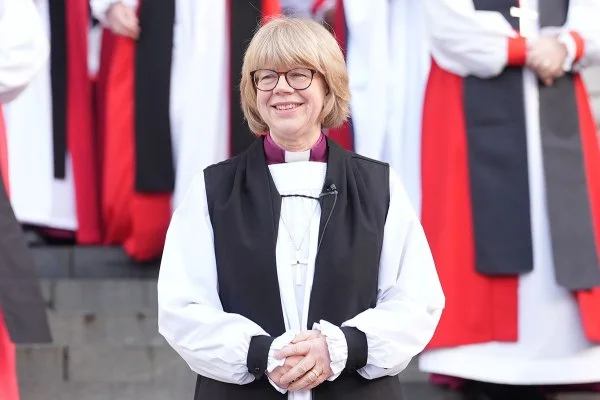
Sarah Mullally was confirmed archbishop of Canterbury Jan. 28 at St. Paul’s Cathedral in London, England. She became the first woman to hold the office in its 1,400-year history.
“It is an extraordinary and humbling privilege to have been called to be the 106th archbishop of Canterbury. In this country and around the world, Anglican churches bring healing and hope to their communities,” Mullally said ahead of her confirmation. “With God’s help, I will seek to guide Christ’s flock with calmness, consistency and compassion.”
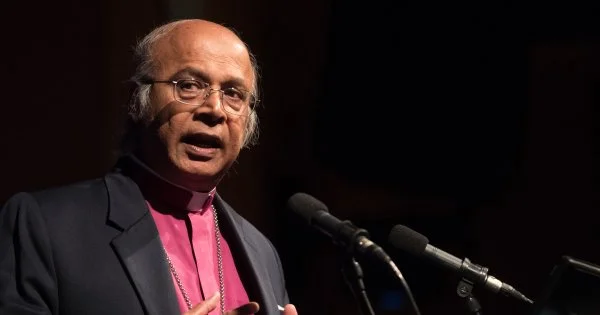
The Common Declaration of Pope Paul VI and Archbishop Michael Ramsey in 1966, together with the Malta Report (1968), set the agenda for the Anglican-Roman Catholic International Commission, of which I was a member for many years. This agenda was nothing less than the restoration of full communion in faith and sacramental life between the two traditions. Since then, ARCIC has produced a succession of agreements on Eucharist, Ministry, Authority, Salvation, Moral Teaching, and the Blessed Virgin Mary, matters which were seen as Church-dividing. In the year 2000, in spite of some new obstacles, Archbishop George Carey of Canterbury and Cardinal Cassidy of the Pontifical Council for Promoting Christian Unity were able to call a meeting of bishops to consider how to take forward, in practical terms, the remarkable agreements already reached by ARCIC. Thus was formed the International Anglican-Roman Catholic Commission on Unity and Mission, of which I was also a member.