Anglican-Roman Catholic Dialogue ~ IARCCUM.org
Online resource centre for Anglican-Roman Catholic relations
• 2026
• 2025
• 2024
• 2023
• 2022
• 2021
• 2020
• 2019
• 2018
• 2017
• 2016
• 2015
• 2014
• 2013
• 2012
• 2011
• 2010
• 2009
• 2008
• 2007
• 2006
• 2005
• 2004
• 2003
• 2002
• 2001
• 2000
• 1999
• 1998
• 1997
• 1996
• 1967
• 1966
 We invite you to visit our Bluesky feed, a new social media platform that replaces Twitter/X. Bluesky has reintroduced content moderation and eliminated advertizing. Follow us now on Bluesky.
A Call to Reconciliation: A Joint Document from ARCUSA (26 Feb 2026)
A paradigm shift for English Catholicism (11 Feb 2026)
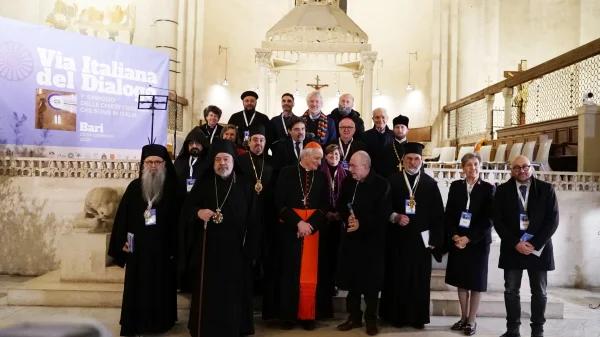
Italy’s Christian churches sign first ecumenical pact (5 Feb 2026)
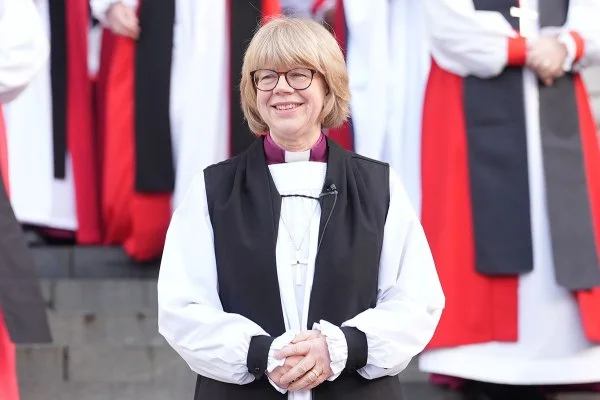
Sarah Mullally confirmed as 106th archbishop of Canterbury (28 Jan 2026)
My Journey to Full Communion with the See of Peter (14 Jan 2026)
News & Opinion
• 2026
• 2025
• 2024
• 2023
• 2022
• 2021
• 2020
• 2019
• 2018
• 2017
• 2016
• 2015
• 2014
• 2013
• 2012
• 2011
• 2010
• 2009
• 2008
• 2007
• 2006
• 2005
• 2004
• 2003
• 2002
• 2001
• 2000
• 1999
• 1998
• 1997
• 1996
• 1967
• 1966
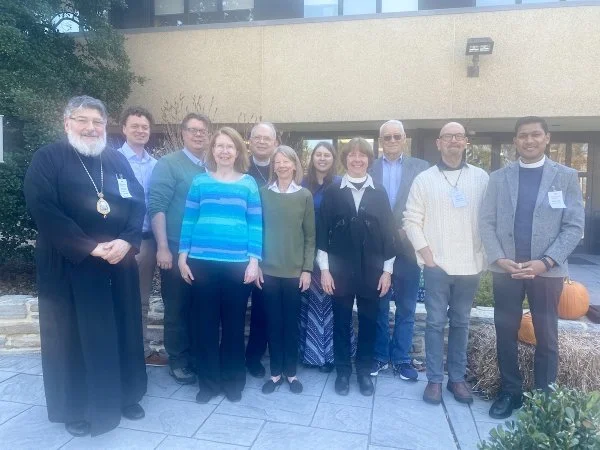
Popes from the Anglican-Roman Catholic dialogues
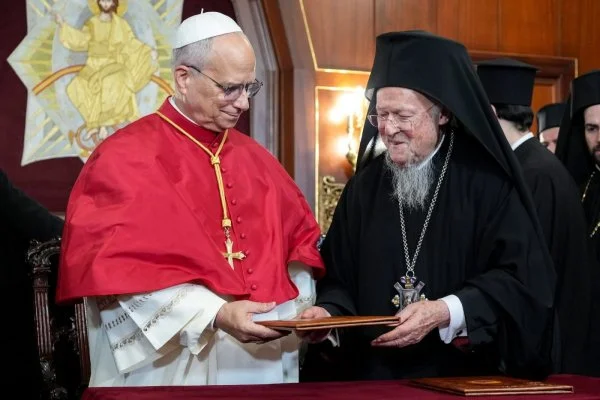
Pope Leo XIV and Ecumenical Patriarch Bartholomew of Constantinople called on Christians of the East and West to finally agree on a common date for Easter.
During a meeting at the patriarchal palace on 29 November, the two leaders — who met to celebrate the 1,700th anniversary of the Council of Nicaea — said the anniversary should inspire “new and courageous steps on the path toward unity,” including finding that common date.
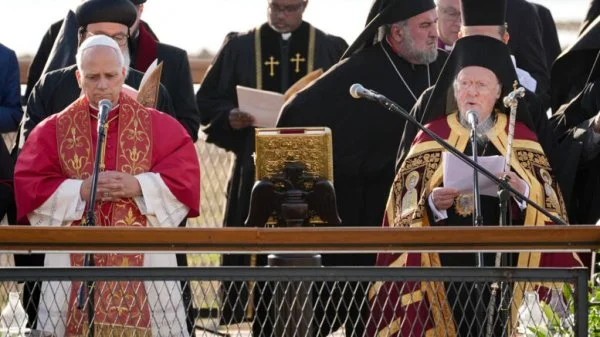
Although the ancient city of Nicaea lies in ruins and the geographic centre of Christianity has shifted West, Pope Leo XIV and Christian leaders gathered at an archaeological site in Türkiye to celebrate the enduring faith set out in the Nicene Creed.
Orthodox Ecumenical Patriarch Bartholomew of Constantinople hosted the ecumenical prayer service and the common recitation of the Creed Nov. 28 at Iznik, site of the ancient Nicaea, about 80 miles southeast of Istanbul.
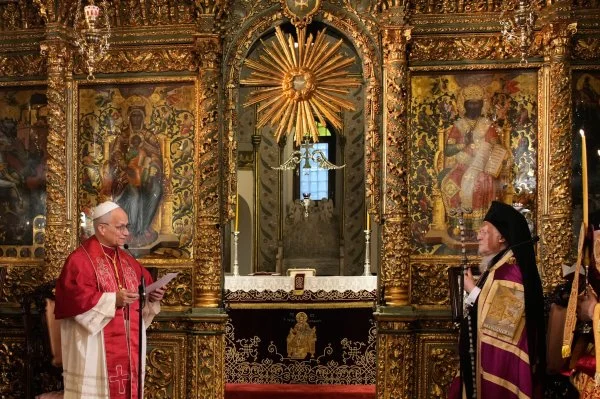
Pope Leo XIV and Ecumenical Patriarch Bartholomew of Constantinople met at the patriarchal seat in the ancient Phanar quarter on Saturday (Nov. 29) to sign a joint declaration affirming their commitment to achieving communion between the two churches.
“We continue to walk with firm determination on the path of dialogue, in love and truth, towards the hoped-for restoration of full communion between our sister Churches,” the declaration read.
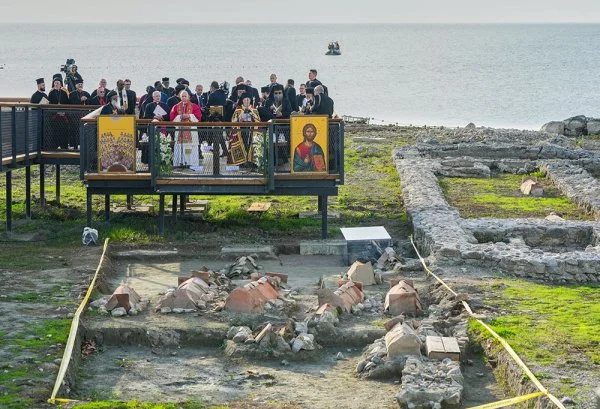
Seventeen centuries after bishops from East and West convened in Nicaea to craft the creed that defined Christianity, Pope Leo XIV returned to the ancient site with an appeal to “overcome the scandal of the divisions” that continue to fracture Christians today.
Marking the 1,700th anniversary of the Council of Nicaea — the centrepiece of his trip to Türkiye and Lebanon — the pope called on Christians the world over “to nurture the desire for unity for which the Lord Jesus prayed and gave his life.”
On his second day in Türkiye, he prayed alongside Ecumenical Patriarch Bartholomew, the spiritual leader of the world’s 300 million Orthodox Christians, on the shore of Lake Iznik — where the council that established a common creed for Christians convened 1,700 years ago.
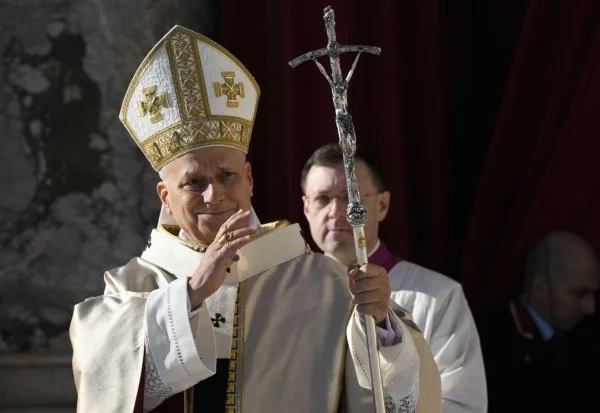
When Christians recite the Creed, it should prompt an examination of conscience about what they truly believe and what kind of example of faith in God they give to others, Pope Leo XIV wrote.
“Wars have been fought, and people have been killed, persecuted and discriminated against in the name of God,” he wrote. “Instead of proclaiming a merciful God, a vengeful God has been presented who instills terror and punishes.”
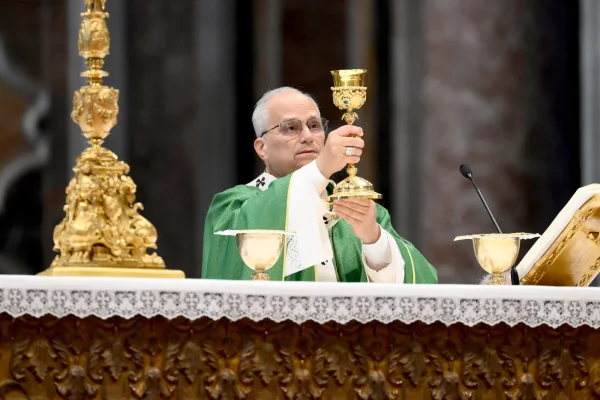
Brothers and Sisters,
As we celebrate the Jubilee of the Synodal Teams and Participatory Bodies, we are invited to contemplate and rediscover the mystery of the Church. She is not merely a religious institution, nor is she simply identified with hierarchies and structures. The Second Vatican Council reminds us that the Church is the visible sign of the union between God and humanity, where God intends to bring us all together into one family of brothers and sisters and make us his people: a people made up of beloved children, all united in the one embrace of his love.
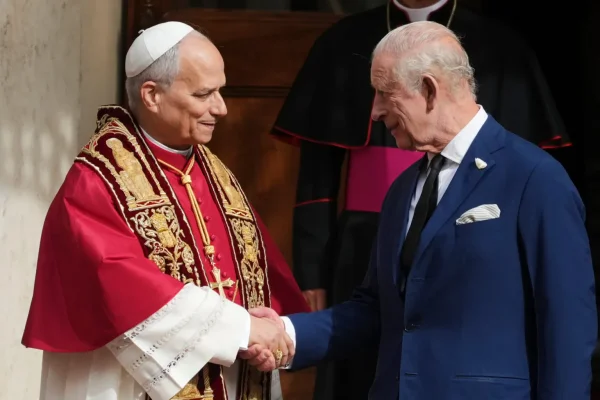
King Charles III and Queen Camilla of the United Kingdom were received in a private audience by Pope Leo XIV in the Vatican’s Apostolic Palace this morning, Oct. 23, during a state visit to the Holy See. Afterward, for the first time in history, a British monarch and a pope prayed together in the Sistine Chapel in an event of great ecumenical significance.
The royal couple arrived at the Vatican in a motorcade that drove through St. Peter’s Square and the Arch of the Bells and then to the San Damaso Courtyard of the Apostolic Palace. They were given a state welcome with a guard of honor provided by the Swiss Guard, as a band played the national anthems of the United Kingdom and Vatican City State. The regent of the papal household, Msgr. Leonardo Sapienza, then escorted them to the pope’s library, where they were welcomed by Pope Leo.
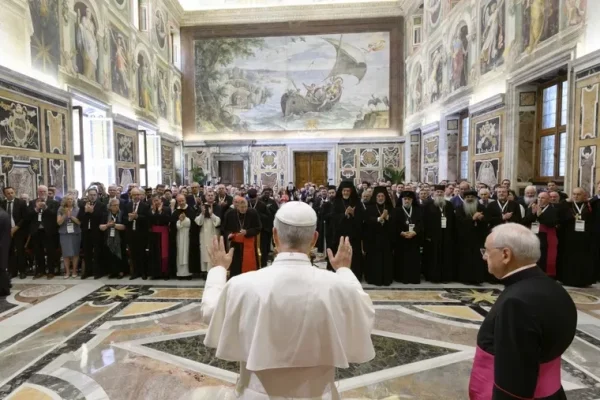
“Several concrete solutions have been proposed that, while respecting the principle of Nicaea, would allow Christians to celebrate together the ‘Feast of Feasts,’” the Holy Father said.
Pope Leo XIV on Saturday said the Catholic Church is open to establishing a common date of Easter among all Christian churches, echoing one of the aims of the Council of Nicaea that met 1,700 years ago.
The Pope spoke to participants of the symposium “Nicaea and the Church of the Third Millennium: Towards Catholic-Orthodox Unity,” which took place this week at the Pontifical University of St. Thomas Aquinas in Rome.
The Holy Father called the 325 Council of Nicaea “foundational for the common journey that Catholics and Orthodox have undertaken together since the Second Vatican Council.”
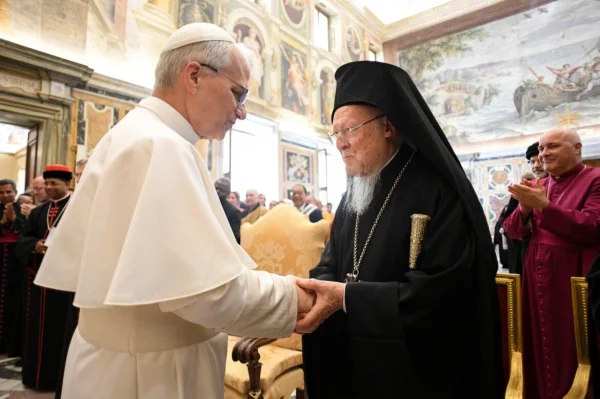
During a special audience with religious leaders who came to Rome for the inauguration of his papal ministry, Pope Leo XIV vowed to continue working towards Christian unity and promoting dialogue among all religions.
“Now is the time for dialogue and building bridges,” the pope said May 19 as he met with the leaders in the Clementine Hall of the Apostolic Palace.
His guests included Orthodox Ecumenical Patriarch Bartholomew of Constantinople, Orthodox Patriarch Theophilos III of Jerusalem, and Catholicos Awa III, patriarch of the Assyrian Church of the East, as well as Anglican, Methodist, and Lutheran leaders. Representatives of the Jewish, Muslim, Buddhist, Sikh, and Jain communities also attended.
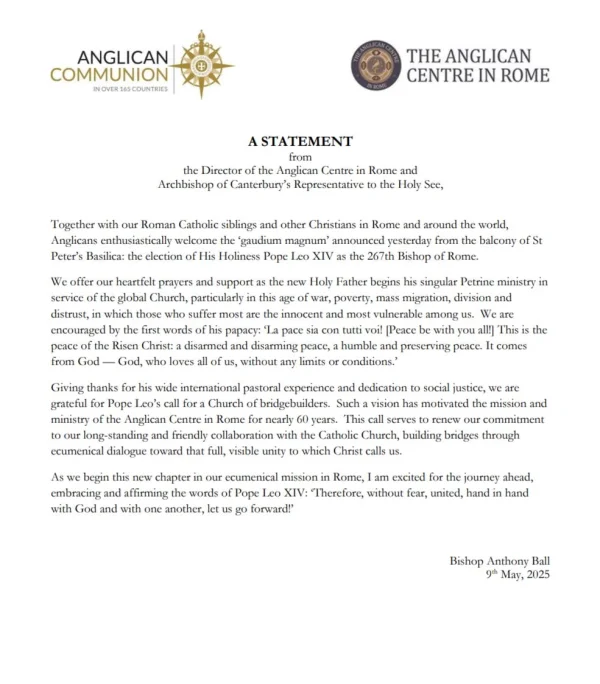
Together with our Roman Catholic siblings and other Christians in Rome and around the world, Anglicans enthusiastically, welcome the ‘gaudium magnum’ announced yesterday from the balcony of St Peter’s Basilica: the election of His Holiness Pope Leo XIV as the 267th Bishop of Rome.
We offer our heartfelt prayers and support as the new Holy Father begins his singular Petrine ministry in service of the global Church, particularly in this age of war, poverty, mass migration, division and distrust, in which those who suffer most are the innocent and most vulnerable among us. We are encouraged by the first words of his papacy: ‘La pace sia con tutti voi! [Peace be with you all!] This is the peace of the Risen Christ: a disarmed and disarming peace, a humble and preserving peace. It comes from God – God, who loves all of us, without any limits or conditions.’
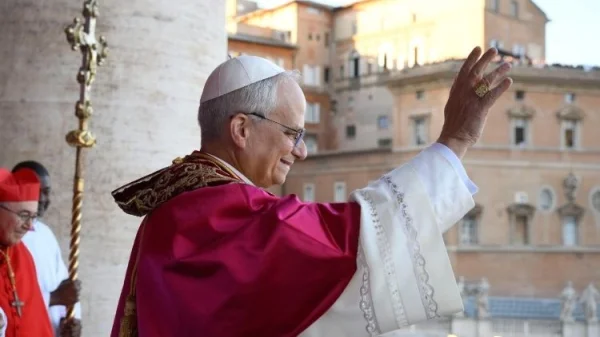
Prior to his election as Pope Leo XIV, Cardinal Robert Francis Prevost was Prefect of the Dicastery for Bishops. Here is the biography of the 267th Bishop of Rome.
The first Augustinian Pope, Leo XIV is the second Roman Pontiff – after Pope Francis – from the Americas. Unlike Jorge Mario Bergoglio, however, the 69-year-old Robert Francis Prevost is from the northern part of the continent, though he spent many years as a missionary in Peru before being elected head of the Augustinians for two consecutive terms.
The new Bishop of Rome was born on September 14, 1955, in Chicago, Illinois, to Louis Marius Prevost, of French and Italian descent, and Mildred Martínez, of Spanish descent. He has two brothers, Louis Martín and John Joseph.
The Secretary General of the Anglican Communion, the Rt Revd Anthony Poggo, has shared a message of encouragement on the election of Pope Leo XIV. The statement reads:
With great joy, we welcome the election and appointment of Pope Leo XIV, the 267th Pope and Bishop of Rome.
On behalf of the worldwide Anglican Communion, we share our prayers, celebration and encouragement as His Holiness takes up his global ministry in service of the Church.
May he lead with faithfulness, vision and courage, embodying the Christian values of peace and justice in service of mission and evangelisation.
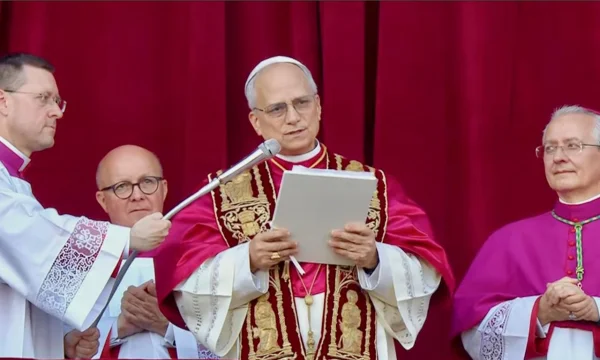
The World Council of Churches (WCC) extended ecumenical greetings to Pope Leo XIV and an assurance of continuing engagement with the Roman Catholic Church in the era of its new pontiff.
WCC moderator of the central committee, Bishop Prof. Dr Heinrich Bedford-Strohm, expressed joy and hope. “As successor of Pope Francis, he will move in a strong tradition,” said Bedford-Strohm. “I expect him to continue Pope Francis’ witness of love towards all people, especially those most vulnerable, and of love for nonhuman creation.”
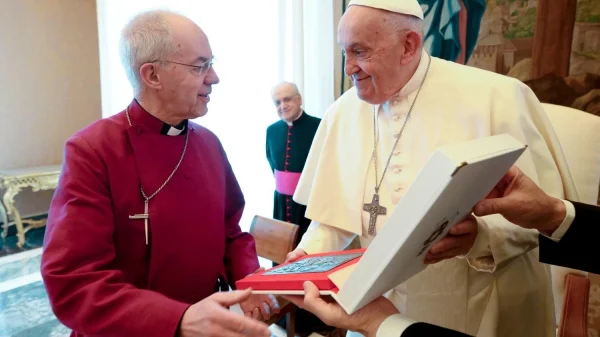
Speaking to the Primates of the Anglican Communion, Pope Francis says that even the very earliest Christians had their disagreements.
Senior clergy from the Anglican Communion are in Rome this week for the body’s 2024 Primates Meeting – the first of its kind to be held in the Eternal City.
On Thursday morning, participants, including the Archbishop of Canterbury, Justin Welby, met with Pope Francis in the Vatican.
Long history of cooperation
Pope Francis began his address by thanking Archbishop Welby for his presence, noting that he “began his service as Archbishop of Canterbury around the same time that I began mine as Bishop of Rome.”
“Since then,” the Pope added, “we have had many occasions to meet, to pray together and to testify to our faith in the Lord. Dear brother Justin, thank you for this fraternal cooperation on behalf of the Gospel!”
He stressed in particular the pair’s joint trip to Sudan in 2023, which, he said, was “really beautiful”.
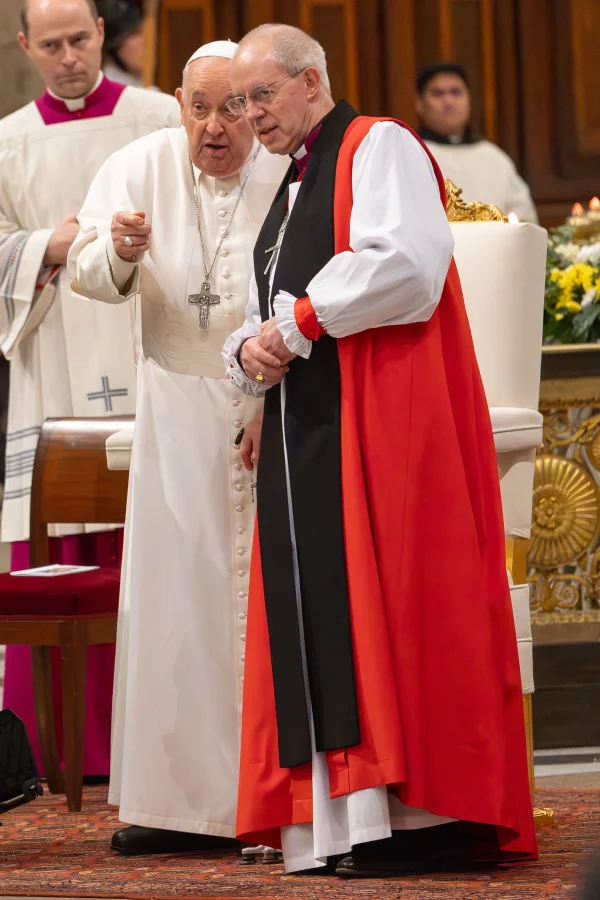
Divided Christians will draw closer to one another only by loving God and loving their neighbours, serving one another and not pointing fingers in blame for past faults, Pope Francis said.
Closing the Week of Prayer for Christian Unity with an evening prayer service Jan. 25 at Rome’s Basilica of St. Paul Outside the Walls, Francis was joined by Anglican Archbishop Justin Welby of Canterbury and, at the end of the service, the two commissioned pairs of Anglican and Catholic bishops from 27 countries to “bear witness together to the hope that does not deceive and to the unity for which our Savior prayed.”
Members of the Joint International Commission for Theological Dialogue between the Catholic Church and the Oriental Orthodox Churches, who were meeting in Rome, also participated along with representatives of Orthodox, Protestant and Anglican communities in Italy.
In his homily, Francis reflected on the theme for the 2024 celebration of the week of prayer: “You shall love the Lord your God … and your neighbour as yourself” from Luke 10:27.
The passage comes from a Gospel story in which a scholar of the law asks Jesus what he must do to inherit eternal life. After Jesus affirms the need to love God and one’s neighbour, the scholar asks, “And who is my neighbour?”
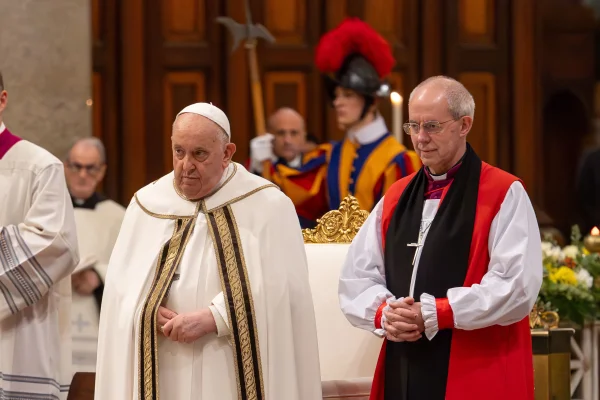
Today, Pope Francis and the Archbishop of Canterbury, Justin Welby, commissioned pairs of Anglican and Roman Catholic bishops from across the world at Vespers (Evening Prayer) at the Basilica of St Paul’s Outside the Walls in Rome. Marking the end of the Week of Prayer for Christian Unity, the ecumenical congregation drawn from various Christian traditions, prayed for the unity of the Church.
The bishop pairs are currently attending ‘Growing Together,’ a weeklong programme of ecumenical dialogue and pilgrimage, taking place in Rome and Canterbury. It is organised by the International Anglican-Roman Catholic Commission for Unity and Mission (IARCCUM), supported by the Anglican Communion Office and the Dicastery for Promoting Christian Unity.
The Pope and the Archbishop commissioned the bishops to engage in joint mission and witness and to promote reception of the agreements already reached in theological dialogues between the two traditions. The location of the commissioning is significant, as it marks the place where the apostle Paul was buried after his martyrdom in Rome.
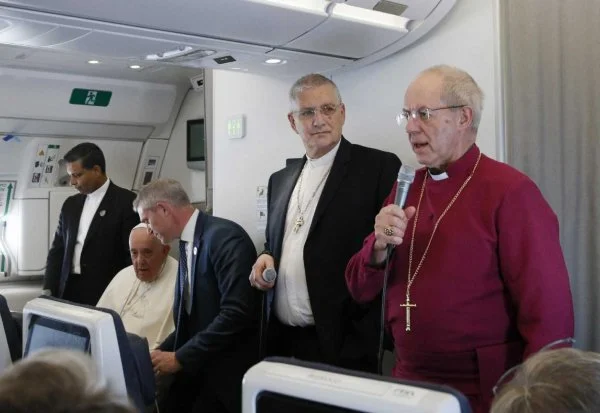
Pope Francis asked the Anglican archbishop of Canterbury and the moderator of the Presbyterian Church of Scotland to join him for his usual post-trip news conference on their flight back to Rome from Juba, South Sudan, Feb. 5.
At the end of six days in African countries bloodied by war and conflict, Pope Francis said that “the biggest plague” afflicting the world today is the weapons trade.
Tribalism with its ancient rivalries is a problem, he told reporters Feb. 5, “but it is also true that the violence is provoked” by the ready supply of weapons and that making it easier for people to kill each other just to make money “is diabolical — I have no other word for it.”
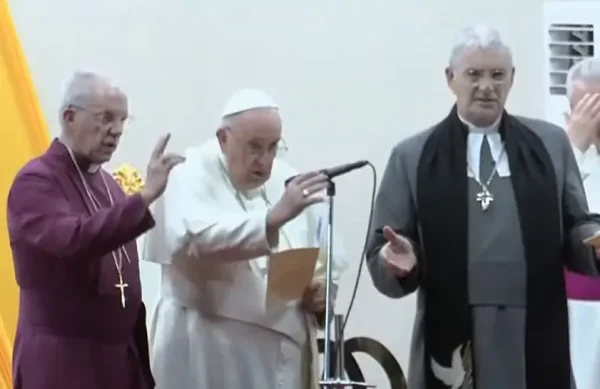
As part of their historic ecumenical pilgrimage to South Sudan, Pope Francis, Anglican Archbishop Justin Welby of Canterbury and the Rev. Iain Greenshields, moderator of the Presbyterian Church of Scotland, led an ecumenical prayer for peace Feb. 4 in Juba. After scolding South Sudan’s political leaders and consoling some of its poorest victims, Pope Francis, Anglican Archbishop Justin Welby of Canterbury and the Rev. Iain Greenshields, moderator of the Presbyterian Church of Scotland, rallied their faithful to prayer and action.
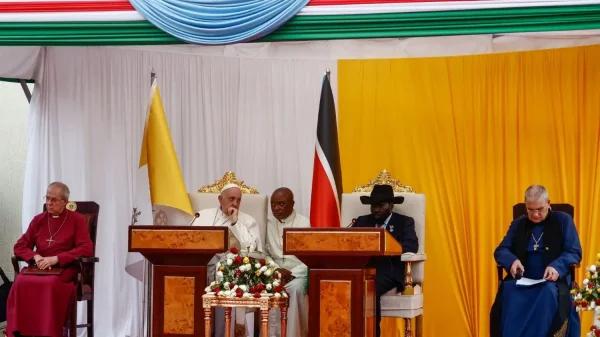
Pope Francis tells the leaders of divided South Sudan that future generations will either venerate their names or cancel their memory, based on what they do now, and he issues an appeal “to leave the time of war behind and let a time of peace dawn.”
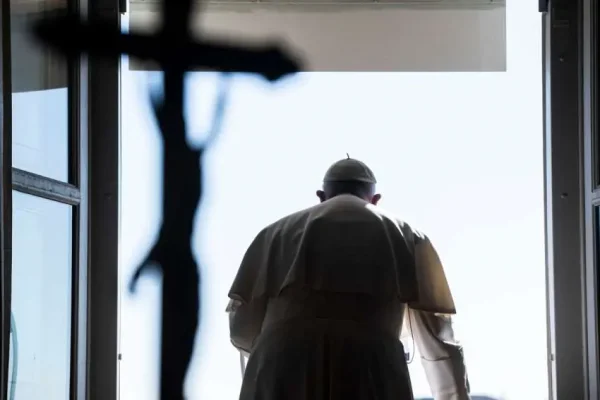
Before beginning their ecumenical pilgrimage of peace to South Sudan, Pope Francis and the leaders of the Anglican Communion and the Presbyterian Church of Scotland asked Christians around the globe to accompany them with prayers. Pope Francis is scheduled to fly first to Congo for a visit Jan. 31-Feb. 3 before meeting up in Juba, South Sudan, with Anglican Archbishop Justin Welby of Canterbury and the Rev. Iain Greenshields, moderator of the Church of Scotland. About 60% of South Sudan’s population is Christian, and the leaders’ three denominations are the largest in the country.