Anglican-Roman Catholic Dialogue ~ IARCCUM.org
Online resource centre for Anglican-Roman Catholic relations
• 2026
• 2025
• 2024
• 2023
• 2022
• 2021
• 2020
• 2019
• 2018
• 2017
• 2016
• 2015
• 2014
• 2013
• 2012
• 2011
• 2010
• 2009
• 2008
• 2007
• 2006
• 2005
• 2004
• 2003
• 2002
• 2001
• 2000
• 1999
• 1998
• 1997
• 1996
• 1967
• 1966
 We invite you to visit our Bluesky feed, a new social media platform that replaces Twitter/X. Bluesky has reintroduced content moderation and eliminated advertizing. Follow us now on Bluesky.
Belgian bishop plans to ordain married men to fulfil Synod vision (21 Mar 2026)
A Call to Reconciliation: A Joint Document from ARCUSA (26 Feb 2026)
A letter to Bishops around the Anglican Communion (17 Feb 2026)
A paradigm shift for English Catholicism (11 Feb 2026)
News & Opinion
• 2026
• 2025
• 2024
• 2023
• 2022
• 2021
• 2020
• 2019
• 2018
• 2017
• 2016
• 2015
• 2014
• 2013
• 2012
• 2011
• 2010
• 2009
• 2008
• 2007
• 2006
• 2005
• 2004
• 2003
• 2002
• 2001
• 2000
• 1999
• 1998
• 1997
• 1996
• 1967
• 1966
Anglican-Roman Catholic news & opinion
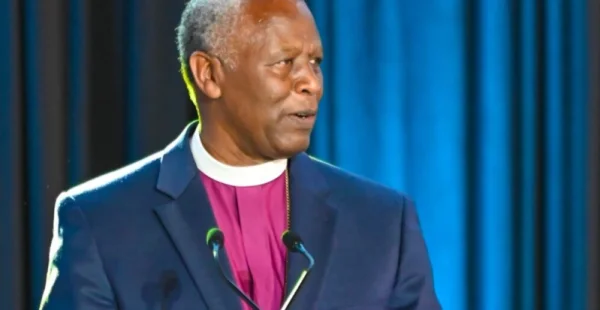
GAFCON, a conservative Anglican movement that claims to represent the majority of Anglicans worldwide, particularly in the Global South, is moving toward a formal reordering of global Anglican leadership following its October renunciation of the Archbishop of Canterbury’s authority.
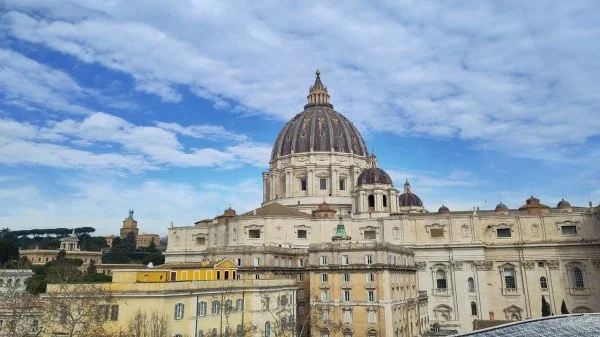
A report presenting the results of the Commission’s work has been released. It rules out admitting women to the diaconate understood as a degree of the sacrament of Holy Orders, but says that it is not currently possible “to formulate a definitive judgment, as in the case of priestly ordination.”
“The status quaestionis of historical research and theological investigation, as well as their mutual implications, rules out the possibility of moving in the direction of admitting women to the diaconate understood as a degree of the sacrament of Holy Orders. In light of Sacred Scripture, Tradition, and the Church’s Magisterium, this assessment is strongly maintained, although it does not at present allow for a definitive judgment to be formulated, as is the case with priestly ordination.”
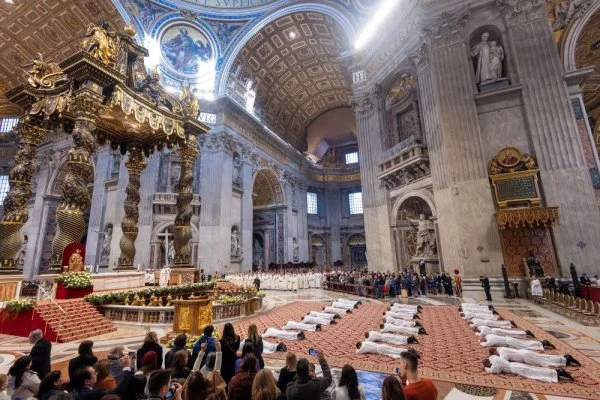
A Vatican commission studying the possibility of female deacons reported that the current state of historical and theological research “excludes the possibility of proceeding” toward admitting women to the diaconate, a conclusion that slows momentum on one of the church’s most debated questions while stopping short of a definitive no.
In a letter sharing the results of its work with Pope Leo XIV and released by the Vatican Dec. 4, the commission reported a 7-1 vote in favour of a statement concluding that the church cannot currently move toward admitting women to the third degree of holy orders, the diaconate.
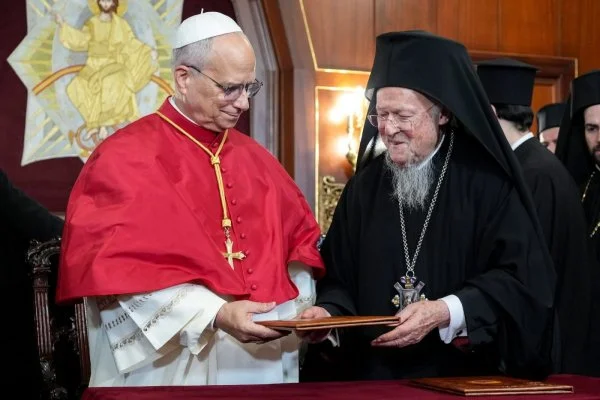
Pope Leo XIV and Ecumenical Patriarch Bartholomew of Constantinople called on Christians of the East and West to finally agree on a common date for Easter.
During a meeting at the patriarchal palace on 29 November, the two leaders — who met to celebrate the 1,700th anniversary of the Council of Nicaea — said the anniversary should inspire “new and courageous steps on the path toward unity,” including finding that common date.
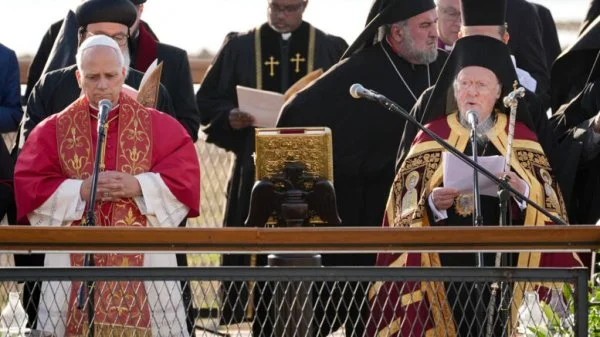
Although the ancient city of Nicaea lies in ruins and the geographic centre of Christianity has shifted West, Pope Leo XIV and Christian leaders gathered at an archaeological site in Türkiye to celebrate the enduring faith set out in the Nicene Creed.
Orthodox Ecumenical Patriarch Bartholomew of Constantinople hosted the ecumenical prayer service and the common recitation of the Creed Nov. 28 at Iznik, site of the ancient Nicaea, about 80 miles southeast of Istanbul.
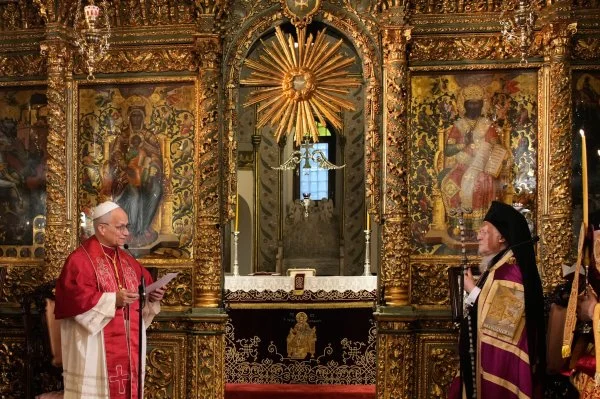
Pope Leo XIV and Ecumenical Patriarch Bartholomew of Constantinople met at the patriarchal seat in the ancient Phanar quarter on Saturday (Nov. 29) to sign a joint declaration affirming their commitment to achieving communion between the two churches.
“We continue to walk with firm determination on the path of dialogue, in love and truth, towards the hoped-for restoration of full communion between our sister Churches,” the declaration read.
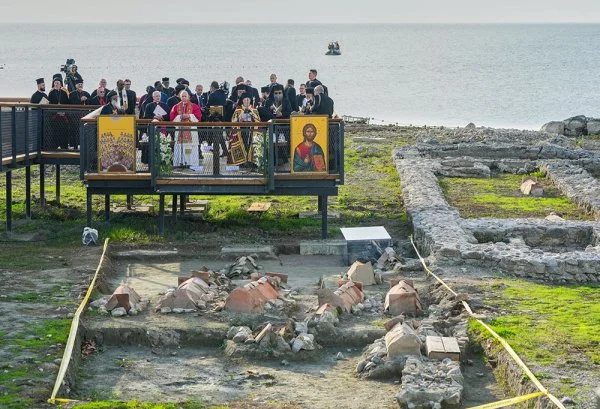
Seventeen centuries after bishops from East and West convened in Nicaea to craft the creed that defined Christianity, Pope Leo XIV returned to the ancient site with an appeal to “overcome the scandal of the divisions” that continue to fracture Christians today.
Marking the 1,700th anniversary of the Council of Nicaea — the centrepiece of his trip to Türkiye and Lebanon — the pope called on Christians the world over “to nurture the desire for unity for which the Lord Jesus prayed and gave his life.”
On his second day in Türkiye, he prayed alongside Ecumenical Patriarch Bartholomew, the spiritual leader of the world’s 300 million Orthodox Christians, on the shore of Lake Iznik — where the council that established a common creed for Christians convened 1,700 years ago.
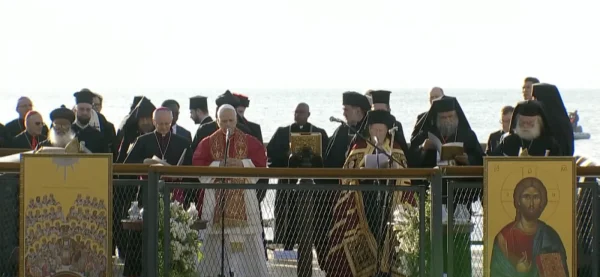
In an historic commemoration of the 1700th anniversary of the First Ecumenical Council, faith leaders gathered in Nicaea—modern-day Iznik, Türkiye – on 28 November to mark the 1700th anniversary of the First Ecumenical Council in the history of the church.
World Council of Churches (WCC) general secretary Rev. Prof. Dr Jerry Pillay joined His All Holiness Patriarch Bartholomew and Pope Leo XIV for an ecumenical prayer service.
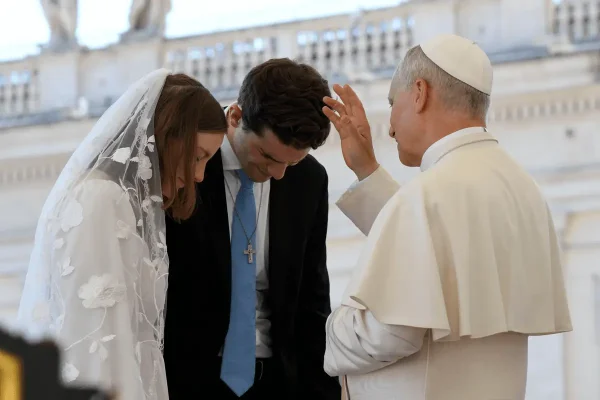
The foundation of sacramental marriage is the unity of the spouses, a bond so intense and grace-filled that it is exclusive and indissoluble, said a document from the Dicastery for the Doctrine of the Faith.
The document, “‘Una Caro’ (One Flesh): In Praise of Monogamy. Doctrinal Note on the Value of Marriage as an Exclusive Union and Mutual Belonging,” was released today […] by the Vatican. Pope Leo XIV approved its contents Nov. 21 and authorized its publication.
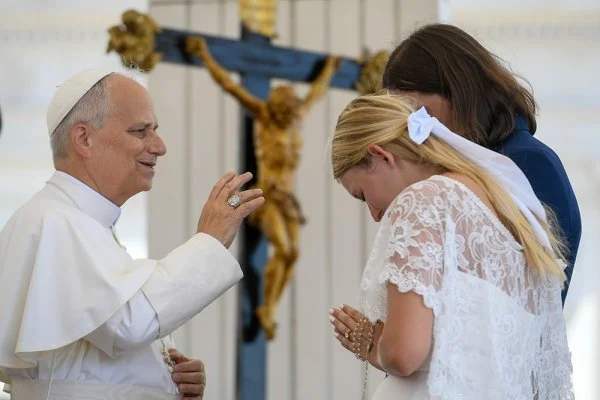
Responding to recent questions raised by African bishops concerned about the practice of polygamy, the Vatican issued a sweeping defence of monogamy Tuesday, Nov. 25.
The 40-page doctrinal note “Una Caro (One Flesh): In Praise of Monogamy: Doctrinal Note on the Value of Marriage as an Exclusive Union and Mutual Belonging,” was issued […] by the Vatican’s Dicastery for the Doctrine of the Faith. It offers a far-reaching theological, biblical, and cultural reflection on the Catholic Church’s teaching that marriage is a “unique and exclusive” union between one man and one woman.
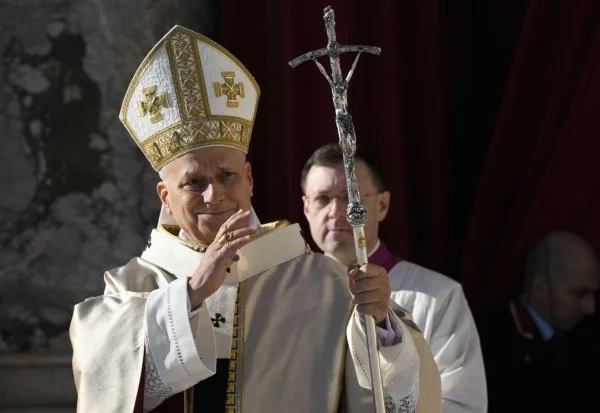
When Christians recite the Creed, it should prompt an examination of conscience about what they truly believe and what kind of example of faith in God they give to others, Pope Leo XIV wrote.
“Wars have been fought, and people have been killed, persecuted and discriminated against in the name of God,” he wrote. “Instead of proclaiming a merciful God, a vengeful God has been presented who instills terror and punishes.”
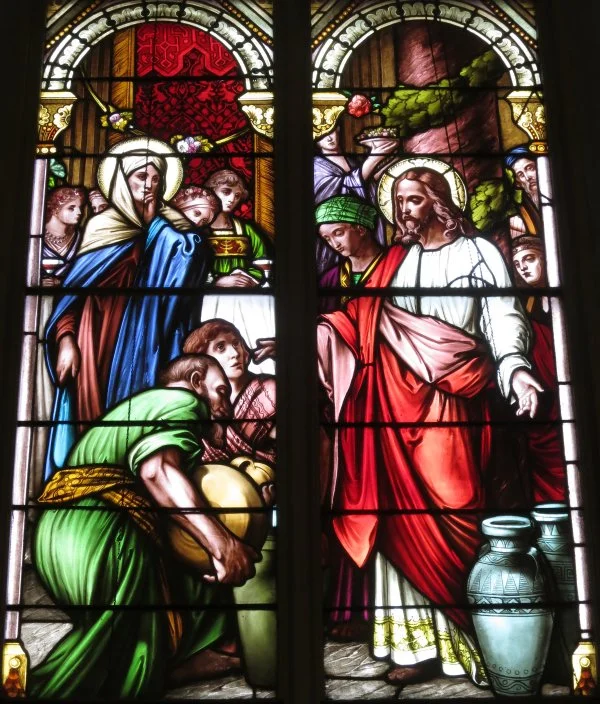
In Rome, on November 4—the memorial of Saint Charles Borromeo—the Dicastery for the Doctrine of the Faith released Mater Populi Fidelis, a doctrinal note that feels like a gentle breeze amid the stormy seas of ecumenical dialogue. More fully titled Doctrinal Note on Some Marian Titles Regarding Mary’s Cooperation in the Work of Salvation, this document is not just another Vatican pronouncement; it is a thoughtful, Scripture-soaked reflection that reins in exuberant Marian devotions while anchoring them firmly in the mystery of Christ. For some within the broader Christian family, especially Anglicans, this note arrives as a welcome affirmation. It conveys a balanced reverence for the Blessed Virgin, reminding us that ecumenism is not about compromise but about rediscovering shared truths.
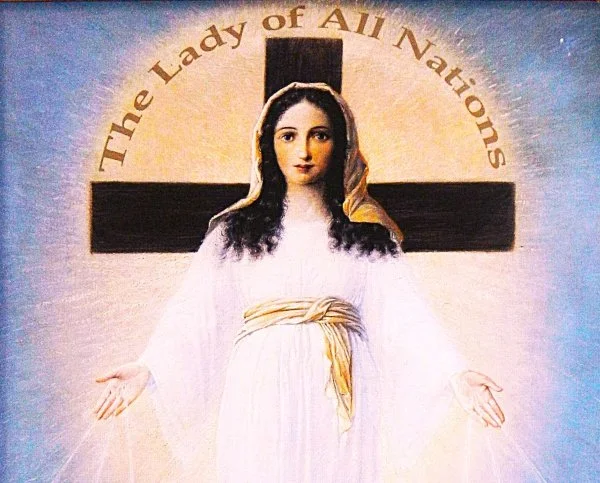
It is “not appropriate” to refer to the Virgin Mary as “Co-redemptrix” because it obscures Christ’s exclusive role in the work of redemption, according to a new Vatican document.
“This title risks obscuring Christ’s unique salvific mediation and can therefore create confusion and an imbalance in the harmony of the truths of the Christian faith,” the document says. “When an expression requires many, repeated explanations to prevent it from straying from a correct meaning, it does not serve the faith of the People of God and becomes unhelpful.”
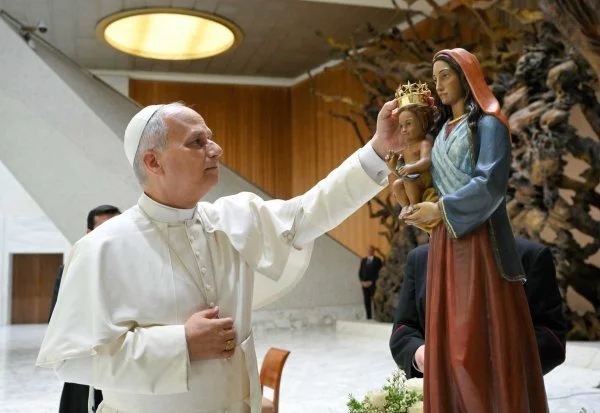
While praising devotion to Mary, the Dicastery for the Doctrine of the Faith firmly rejected moves to formally proclaim Mary as “co-redemptrix” or “co-mediatrix.”
In a lengthy doctrinal note titled “Mater Populi Fidelis” (“Mother of the Faithful People of God”), the dicastery said the title co-redemptrix or co-redeemer “carries the risk of eclipsing the exclusive role of Jesus Christ” in salvation.
And, regarding the title co-mediatrix or co-mediator, it said that Mary, “the first redeemed, could not have been the mediatrix of the grace that she herself received.”
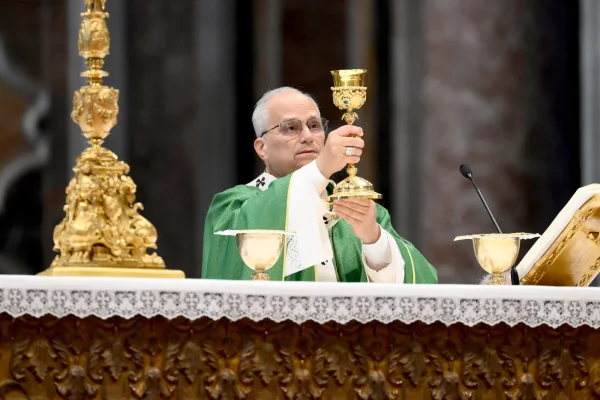
Brothers and Sisters,
As we celebrate the Jubilee of the Synodal Teams and Participatory Bodies, we are invited to contemplate and rediscover the mystery of the Church. She is not merely a religious institution, nor is she simply identified with hierarchies and structures. The Second Vatican Council reminds us that the Church is the visible sign of the union between God and humanity, where God intends to bring us all together into one family of brothers and sisters and make us his people: a people made up of beloved children, all united in the one embrace of his love.
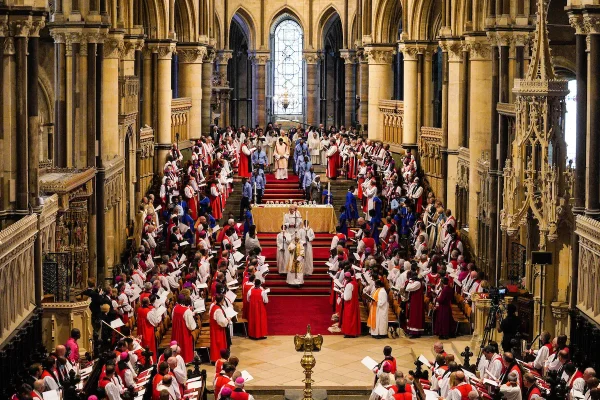
The GAFCON statement’s potential impact was evident as soon as it landed Oct. 16. It immediately provoked intense reactions in Anglican circles around the world.
The conservative Christian network, a mix of leaders from recognized Anglican provinces and breakaway groups, had announced that its primates, as the heads of their respective churches, were effectively leaving the Anglican Communion. They would reject the authority of the archbishop of Canterbury and no longer participate in, contribute to or receive assistance from the structures that have long bound together the Anglican Communion’s 42 autonomous, interdependent provinces.
The statement, titled “The Future Has Arrived,” accused senior leaders of the Anglican Communion of “the abandonment of the Scriptures” and said GAFCON’s member primates had “resolved to reorder the Anglican Communion.”
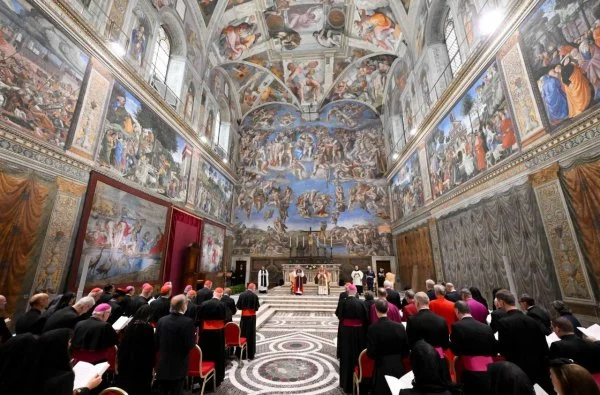
Perspectives on the visit of the British Royal Family to the Vatican by Archbishop Pace, secretary of the Pontifical Council for Christian Unity, and Bishop Ball, director of the Anglican Centre in Rome. The warmth and gestures that accompanied it “nurture our confidence in the path of dialogue and engagement with one another to which our churches remain wholeheartedly committed. We continue to hope, as Pope Leo has expressed it, for ‘the re-establishment of full and visible communion.’”
Four years after her death in 1603, the body of Queen Elizabeth I was moved and re-interred in the same grave as her half-sister, Queen Mary I (Tudor), in London’s Westminster Abbey. United by blood, the two were divided by religious affiliation. A series of Acts of Parliament between 1529 and 1536 had transferred all spiritual and canonical authority over the ‘ecclesia anglicana’ from the papacy to the crown. The 1534 Act of Supremacy declared their father, King Henry VIII, Supreme Head of the Church. This Supremacy was briefly repealed during the reign of the Catholic Mary, but was re-established during the reign of the Protestant Elizabeth.
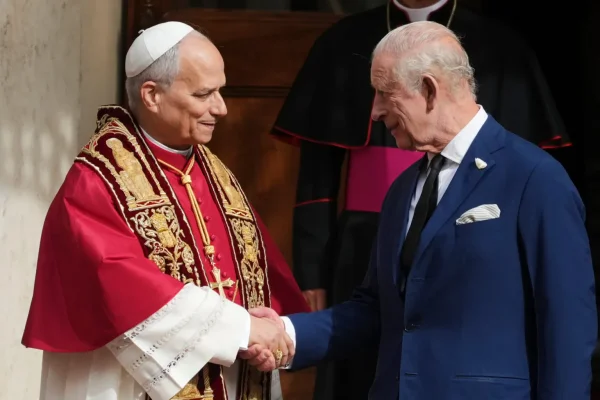
King Charles III and Queen Camilla of the United Kingdom were received in a private audience by Pope Leo XIV in the Vatican’s Apostolic Palace this morning, Oct. 23, during a state visit to the Holy See. Afterward, for the first time in history, a British monarch and a pope prayed together in the Sistine Chapel in an event of great ecumenical significance.
The royal couple arrived at the Vatican in a motorcade that drove through St. Peter’s Square and the Arch of the Bells and then to the San Damaso Courtyard of the Apostolic Palace. They were given a state welcome with a guard of honor provided by the Swiss Guard, as a band played the national anthems of the United Kingdom and Vatican City State. The regent of the papal household, Msgr. Leonardo Sapienza, then escorted them to the pope’s library, where they were welcomed by Pope Leo.
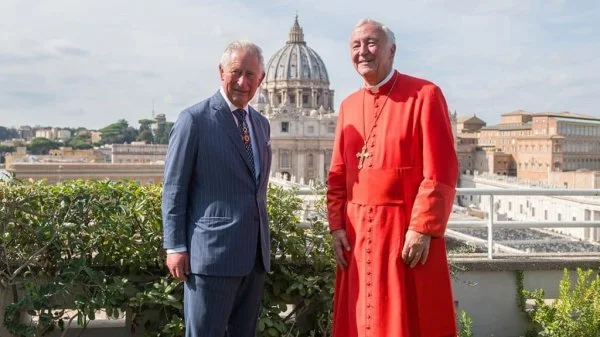
It is now 40 years since King Charles, as Prince of Wales, planned with the help of Vatican officials and the full support of Robert Runcie, who was then Archbishop of Canterbury, to attend a Roman Catholic mass celebrated by Pope John Paul II.
The heir to the throne was going to be in Rome with his wife, Diana, and the intention was that they would visit the Polish pope.
Runcie, who had hosted John Paul at Canterbury Cathedral for an ecumenical service three years earlier in 1982 during the Pope’s pastoral visit to Britain, was enthusiastic and believed the time was right for such an ecumenical gesture in the heart of Rome.
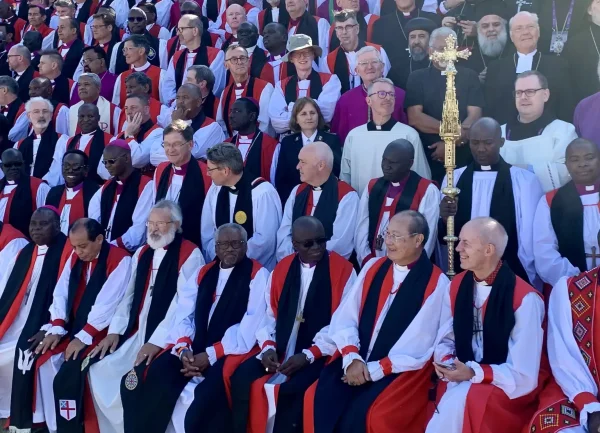
The conservative Anglican network GAFCON, a mix of leaders from Anglican provinces and breakaway groups, released a statement Oct. 16 saying it would disengage from the Anglican Communion’s existing deliberative bodies and create a rival to the Anglican Communion with an unspecified number of provinces.
The message, titled “The Future Has Arrived” and posted to GAFCON’s website, was signed only by Archbishop Laurent Mbanda of Rwanda, as chair of the network’s primates council, though Mbanda said he was issuing the statement after a meeting with other GAFCON primates about their path forward.
In it, Mbanda said the GAFCON primates have rejected the authority of the archbishop of Canterbury, the Anglican Consultative Council, the Lambeth Conference of Anglican bishops and the Primates’ Meeting, the four so-called “Instruments of Communion” by which the 42 autonomous provinces of the Anglican Communion maintain their interdependence. It also says the breakaway provinces “shall not make any monetary contribution to the ACC, nor receive any monetary contribution from the ACC or its networks.”