Anglican-Roman Catholic Dialogue ~ IARCCUM.org
Online resource centre for Anglican-Roman Catholic relations
• 2026
• 2025
• 2024
• 2023
• 2022
• 2021
• 2020
• 2019
• 2018
• 2017
• 2016
• 2015
• 2014
• 2013
• 2012
• 2011
• 2010
• 2009
• 2008
• 2007
• 2006
• 2005
• 2004
• 2003
• 2002
• 2001
• 2000
• 1999
• 1998
• 1997
• 1996
• 1967
• 1966
 We invite you to visit our Bluesky feed, a new social media platform that replaces Twitter/X. Bluesky has reintroduced content moderation and eliminated advertizing. Follow us now on Bluesky.
A Call to Reconciliation: A Joint Document from ARCUSA (26 Feb 2026)
A paradigm shift for English Catholicism (11 Feb 2026)
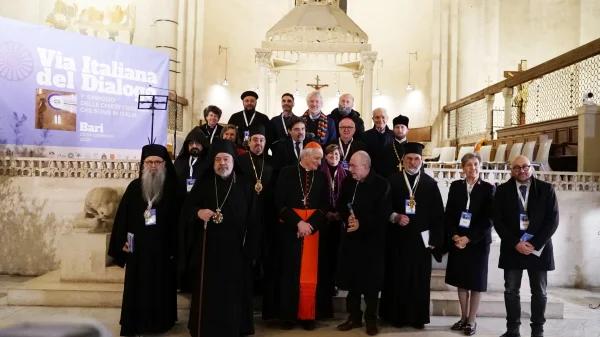
Italy’s Christian churches sign first ecumenical pact (5 Feb 2026)
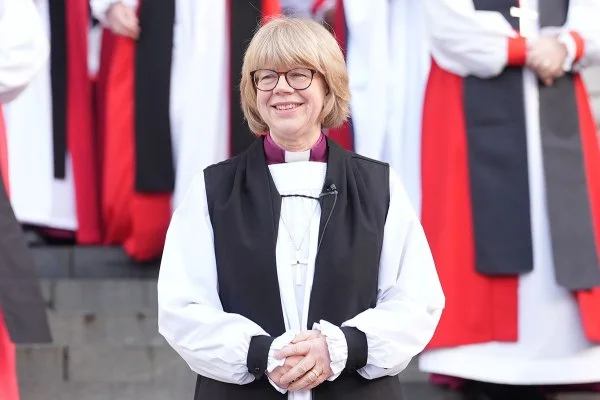
Sarah Mullally confirmed as 106th archbishop of Canterbury (28 Jan 2026)
My Journey to Full Communion with the See of Peter (14 Jan 2026)
News & Opinion
• 2026
• 2025
• 2024
• 2023
• 2022
• 2021
• 2020
• 2019
• 2018
• 2017
• 2016
• 2015
• 2014
• 2013
• 2012
• 2011
• 2010
• 2009
• 2008
• 2007
• 2006
• 2005
• 2004
• 2003
• 2002
• 2001
• 2000
• 1999
• 1998
• 1997
• 1996
• 1967
• 1966
November ~ 2025 ~ Anglican-Roman Catholic news & opinion
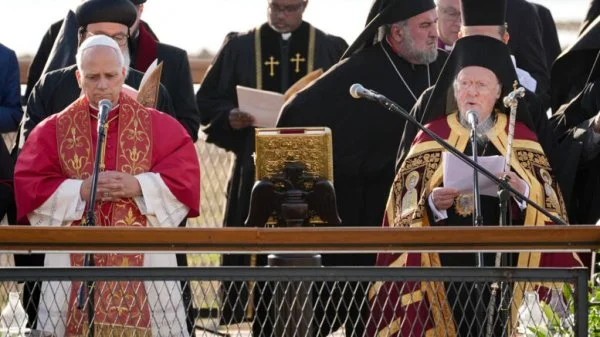
Although the ancient city of Nicaea lies in ruins and the geographic centre of Christianity has shifted West, Pope Leo XIV and Christian leaders gathered at an archaeological site in Türkiye to celebrate the enduring faith set out in the Nicene Creed.
Orthodox Ecumenical Patriarch Bartholomew of Constantinople hosted the ecumenical prayer service and the common recitation of the Creed Nov. 28 at Iznik, site of the ancient Nicaea, about 80 miles southeast of Istanbul.
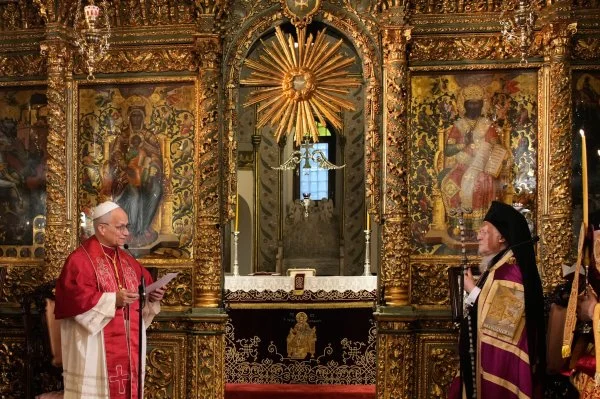
Pope Leo XIV and Ecumenical Patriarch Bartholomew of Constantinople met at the patriarchal seat in the ancient Phanar quarter on Saturday (Nov. 29) to sign a joint declaration affirming their commitment to achieving communion between the two churches.
“We continue to walk with firm determination on the path of dialogue, in love and truth, towards the hoped-for restoration of full communion between our sister Churches,” the declaration read.
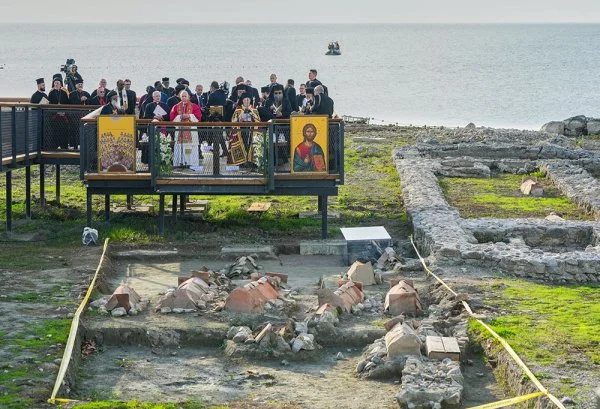
Seventeen centuries after bishops from East and West convened in Nicaea to craft the creed that defined Christianity, Pope Leo XIV returned to the ancient site with an appeal to “overcome the scandal of the divisions” that continue to fracture Christians today.
Marking the 1,700th anniversary of the Council of Nicaea — the centrepiece of his trip to Türkiye and Lebanon — the pope called on Christians the world over “to nurture the desire for unity for which the Lord Jesus prayed and gave his life.”
On his second day in Türkiye, he prayed alongside Ecumenical Patriarch Bartholomew, the spiritual leader of the world’s 300 million Orthodox Christians, on the shore of Lake Iznik — where the council that established a common creed for Christians convened 1,700 years ago.
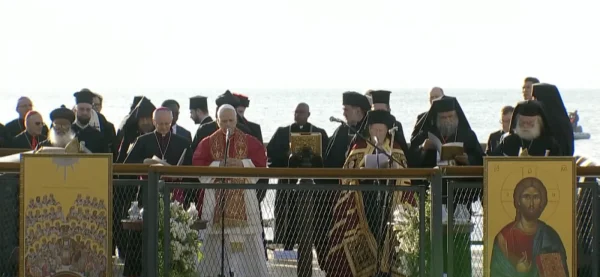
In an historic commemoration of the 1700th anniversary of the First Ecumenical Council, faith leaders gathered in Nicaea—modern-day Iznik, Türkiye – on 28 November to mark the 1700th anniversary of the First Ecumenical Council in the history of the church.
World Council of Churches (WCC) general secretary Rev. Prof. Dr Jerry Pillay joined His All Holiness Patriarch Bartholomew and Pope Leo XIV for an ecumenical prayer service.
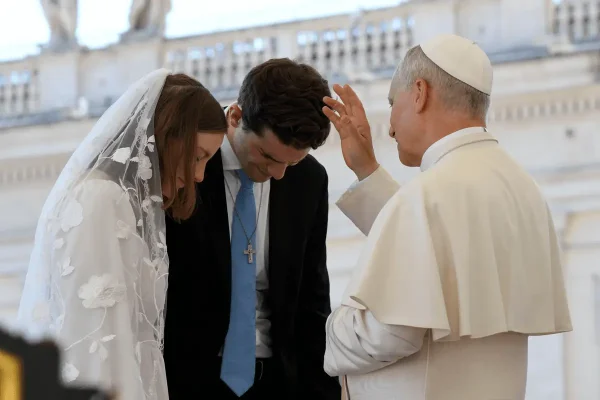
The foundation of sacramental marriage is the unity of the spouses, a bond so intense and grace-filled that it is exclusive and indissoluble, said a document from the Dicastery for the Doctrine of the Faith.
The document, “‘Una Caro’ (One Flesh): In Praise of Monogamy. Doctrinal Note on the Value of Marriage as an Exclusive Union and Mutual Belonging,” was released today […] by the Vatican. Pope Leo XIV approved its contents Nov. 21 and authorized its publication.
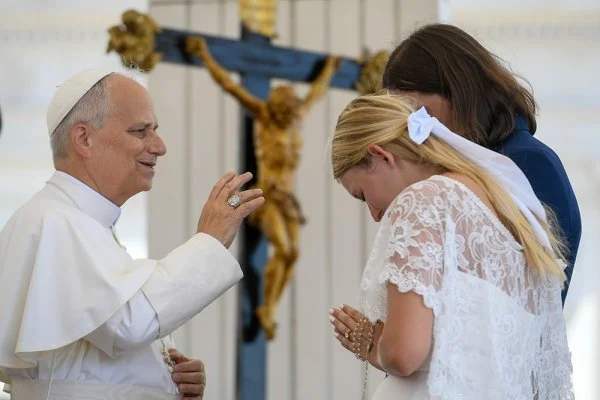
Responding to recent questions raised by African bishops concerned about the practice of polygamy, the Vatican issued a sweeping defence of monogamy Tuesday, Nov. 25.
The 40-page doctrinal note “Una Caro (One Flesh): In Praise of Monogamy: Doctrinal Note on the Value of Marriage as an Exclusive Union and Mutual Belonging,” was issued […] by the Vatican’s Dicastery for the Doctrine of the Faith. It offers a far-reaching theological, biblical, and cultural reflection on the Catholic Church’s teaching that marriage is a “unique and exclusive” union between one man and one woman.
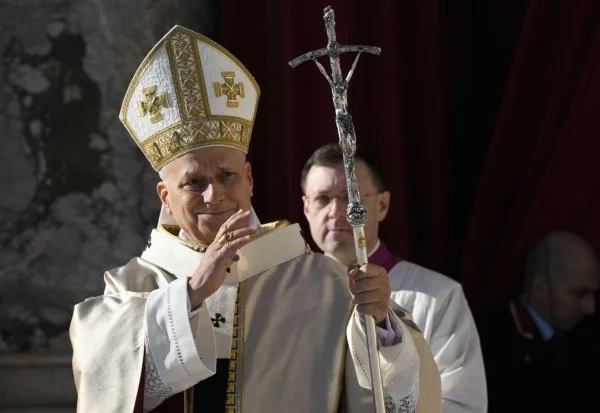
When Christians recite the Creed, it should prompt an examination of conscience about what they truly believe and what kind of example of faith in God they give to others, Pope Leo XIV wrote.
“Wars have been fought, and people have been killed, persecuted and discriminated against in the name of God,” he wrote. “Instead of proclaiming a merciful God, a vengeful God has been presented who instills terror and punishes.”
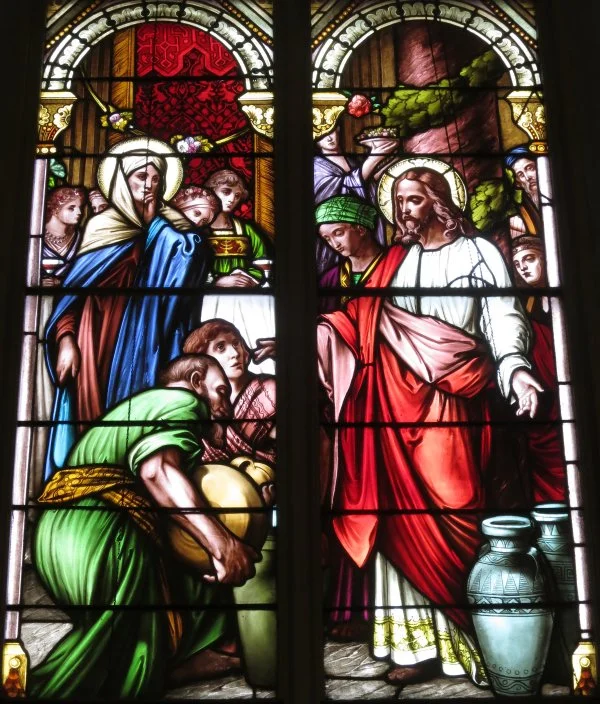
In Rome, on November 4—the memorial of Saint Charles Borromeo—the Dicastery for the Doctrine of the Faith released Mater Populi Fidelis, a doctrinal note that feels like a gentle breeze amid the stormy seas of ecumenical dialogue. More fully titled Doctrinal Note on Some Marian Titles Regarding Mary’s Cooperation in the Work of Salvation, this document is not just another Vatican pronouncement; it is a thoughtful, Scripture-soaked reflection that reins in exuberant Marian devotions while anchoring them firmly in the mystery of Christ. For some within the broader Christian family, especially Anglicans, this note arrives as a welcome affirmation. It conveys a balanced reverence for the Blessed Virgin, reminding us that ecumenism is not about compromise but about rediscovering shared truths.
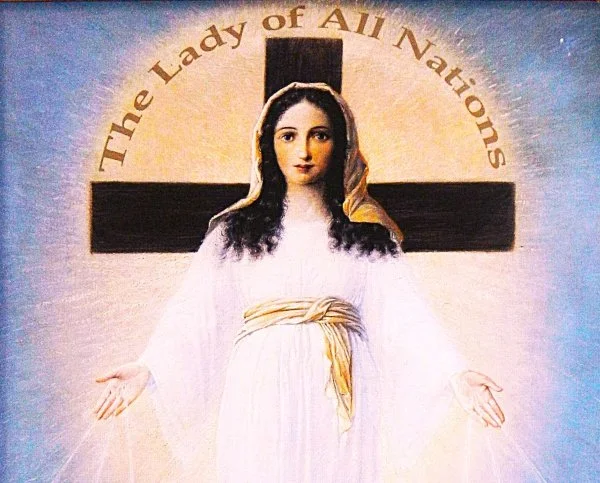
It is “not appropriate” to refer to the Virgin Mary as “Co-redemptrix” because it obscures Christ’s exclusive role in the work of redemption, according to a new Vatican document.
“This title risks obscuring Christ’s unique salvific mediation and can therefore create confusion and an imbalance in the harmony of the truths of the Christian faith,” the document says. “When an expression requires many, repeated explanations to prevent it from straying from a correct meaning, it does not serve the faith of the People of God and becomes unhelpful.”
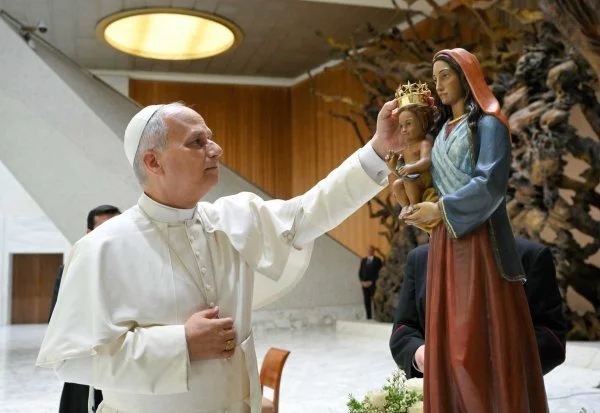
While praising devotion to Mary, the Dicastery for the Doctrine of the Faith firmly rejected moves to formally proclaim Mary as “co-redemptrix” or “co-mediatrix.”
In a lengthy doctrinal note titled “Mater Populi Fidelis” (“Mother of the Faithful People of God”), the dicastery said the title co-redemptrix or co-redeemer “carries the risk of eclipsing the exclusive role of Jesus Christ” in salvation.
And, regarding the title co-mediatrix or co-mediator, it said that Mary, “the first redeemed, could not have been the mediatrix of the grace that she herself received.”