Anglican-Roman Catholic Dialogue ~ IARCCUM.org
Online resource centre for Anglican-Roman Catholic relations
• 2025
• 2024
• 2023
• 2022
• 2021
• 2020
• 2019
• 2018
• 2017
• 2016
• 2015
• 2014
• 2013
• 2012
• 2011
• 2010
• 2009
• 2008
• 2007
• 2006
• 2005
• 2004
• 2003
• 2002
• 2001
• 2000
• 1999
• 1998
• 1997
• 1996
• 1967
• 1966
 We invite you to visit our Bluesky feed, a new social media platform that replaces Twitter/X. Bluesky has reintroduced content moderation and eliminated advertizing. Follow us now on Bluesky.
Little evidence so far that Anglican leaders plan to join GAFCON in leaving Anglican Communion (23 Oct 2025)
Fraternity and hope strengthen relations between Catholics and Anglicans (23 Oct 2025)
Pope Leo and King Charles make history with first-ever joint prayer service in Sistine Chapel (23 Oct 2025)
King Charles and the Catholic ‘hand of history’ (19 Oct 2025)
GAFCON says its members will leave Anglican Communion to form rival network (17 Oct 2025)
News & Opinion
• 2025
• 2024
• 2023
• 2022
• 2021
• 2020
• 2019
• 2018
• 2017
• 2016
• 2015
• 2014
• 2013
• 2012
• 2011
• 2010
• 2009
• 2008
• 2007
• 2006
• 2005
• 2004
• 2003
• 2002
• 2001
• 2000
• 1999
• 1998
• 1997
• 1996
• 1967
• 1966
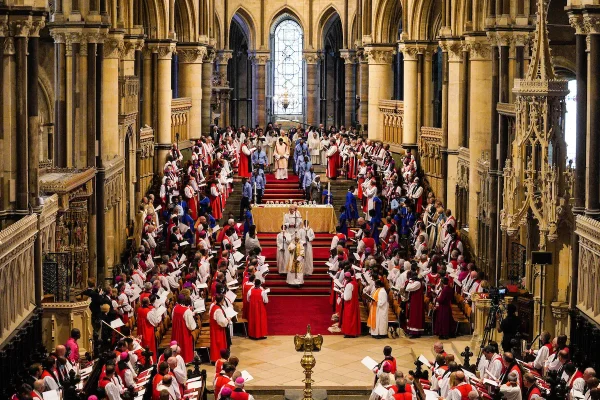
ARCIC from the Anglican-Roman Catholic dialogues
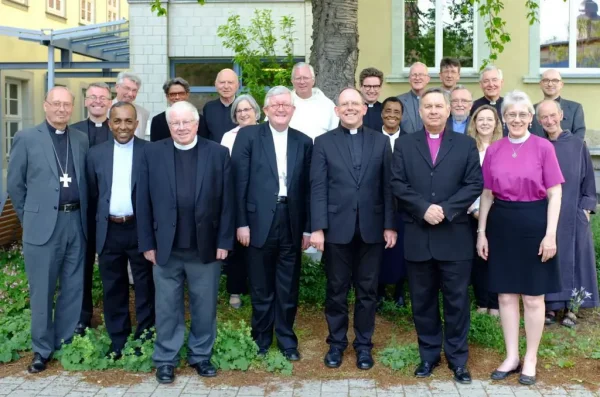
Anglicans and Roman Catholics should see in each other “a community in which the Holy Spirit is alive and active,” the latest communiqué from the official ecumenical dialogue between the Anglican Communion and the Roman Catholic Church says. Members of the third–phase of the Anglican-Roman Catholic International Commission (ARCIC) met in the central German city of Erfurt early this month for their seventh meeting. They chose to meet in the city to mark the 500th anniversary of the Reformation – it is here that Martin Luther was ordained and lived as a monk. During their meeting, the members of ARCIC agreed the text of a new statement looking at Anglican and Roman Catholic ecclesiology. Walking Together on the Way: Learning to be Church – Local, Regional, Universal, to be known as The Erfurt Document, will be published next year.
When his Grace, Archbishop Justin Welby, visited Rome in June 2014, Pope Francis, in his address to the Archbishop said, quite simply, “We must walk together.” The image of the journey undertaken together was already a theme common to a number of papal speeches, and part of Pope Francis‘s vision of the Church. Addressing clergy and lay–people in Assisi on 4 October 2013, he said, “I think this is truly the most wonderful experience we can have: to belong to a people walking, journeying through history together with our Lord, who walks among us! We are not alone; we do not walk alone. We are part of the one flock of Christ that walks together.” This conception of the Church has much to offer our ecumenical relationships. The image has now been used in a variety of different contexts and has been enthusiastically taken up by other Christian leaders. However, two moments in Anglican–Catholic relations that occurred in 2016 have given a fuller sense to its meaning and enable us to discern with greater clarity what walking together with our ecumenical partners might mean.
These two moments came at the beginning and the end of a vespers service celebrated by Pope Francis and Archbishop Justin Welby at San Gregorio al Celio on 5th October. The vespers celebrated the fiftieth anniversary of the historic meeting between Blessed Pope Paul VI and Archbishop Michael Ramsey in 1966. On that occasion the first Common Declaration between a Pope and the Archbishop of Canterbury was published. It signalled the desire of both communities to work towards a “unity of truth“.

If Christians are called to live their faith concretely, then they cannot leave out concrete signs of the unity to which Jesus calls them. And just because the formal Anglican–Roman Catholic theological dialogue has been forced to grapple with new church–dividing attitudes toward issues such as the ordination of women and the blessing of same–sex marriages, it does not mean that common prayer led by Anglican and Catholic leaders and concrete collaboration by Catholic and Anglican parishes are simply window dressing.
Dozens of Catholic and Anglican bishops and several hundred priests and laity from both communities gathered in Rome in early October to celebrate the 50th anniversary of the Vatican meeting of Blessed Paul VI and Anglican Archbishop Michael Ramsey of Canterbury, almost 50 years of formal theological dialogue through the Anglican-Roman Catholic International Commission (known as ARCIC) and the 50th anniversary of the Anglican Centre in Rome.
The celebrations, highlighted by an ecumenical evening prayer service Oct. 5 with Pope Francis and Anglican Archbishop Justin Welby of Canterbury, coincided with a meeting of a newer body, the International Anglican–Roman Catholic Commission for Unity and Mission, known as IARCCUM.
‘ARCIC & IARCCUM: 50 years of walking together in faith‘ is a symposium to be held Wednesday, 5 October 2016 at the Pontifical Gregorian University. Planned in conjunction with the IARCCUM pilgrimage, this symposium will be an opportunity to explore in detail some of the achievements of 50 years of dialogue between Anglicans and Roman Catholics.

Anglican and Catholic theologians, meeting in Toronto, Canada this week, have agreed on the publication of their first ARCIC III document on the theme “Towards a Church fully reconciled“. The volume, which is likely to be published in the autumn, uses the ‘Receptive Ecumenism‘ approach to look at the limitations within each communion and see how one Church can help the other grow towards the fullness of faith. The third Anglican-Roman Catholic International Commission (ARCIC III) is holding its sixth annual meeting from May 11th to 19th, hosted by the Anglican sisters of St John the Divine in Toronto. The 18 members of the Commission have completed work on the first part of their mandate, exploring tensions between the local and Universal Church within the two communions, and are continuing discussions on a second volume, looking at how Anglicans and Catholics make difficult moral and ethical decisions.
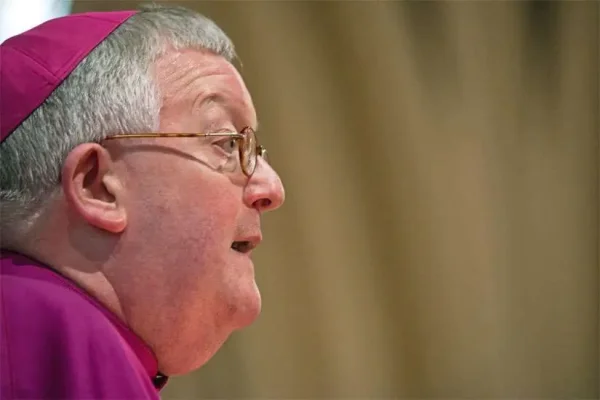
After nearly 50 years of discourse between the Catholic and Anglican communions, the official dialogue body wants to fine–tune how it studies the differences and similarities between two churches which both call themselves Catholic.
“ARCIC III hasn’t proved itself yet,” Sir David Moxon, Anglican co–chair of the Anglican-Roman Catholic International Commission, told The Catholic Register following an ecumenical evensong on Pentecost Sunday.
This third stage of the dialogue has been meeting since 2011, but has yet to publish a major document. It is currently studying how the Church arrives at moral teaching.
The official dialogue sponsored by the Vatican and the Archbishop of Canterbury is meeting in Toronto until May 18, when a concluding communique is expected from the meeting of 22 bishops, theologians and support staff. It is the first time the body has met in Canada and, to the knowledge of the participants, the first time in 50 years that ARCIC has met during Pentecost, when the Holy Spirit first revealed the global unity of the Christian message expressed in the diversity of languages from around the world.
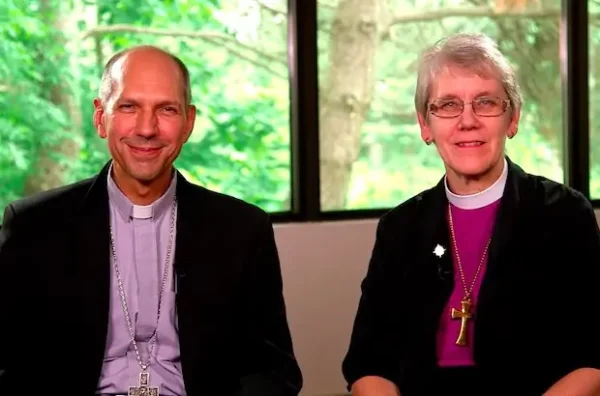
One of the most important and troubled projects from the Second Vatican Council arrives in Toronto May 11 for some serious, scholarly, and saintly talk.
The Anglican-Roman Catholic International Commission, better known as ARCIC, rolls into town to puzzle over how Catholics and Anglicans make decisions over ethical questions and to find new ways to sum up its work over the last five decades.
ARCIC is the official ecumenical dialogue between the world’s 85 million Anglicans and 1.3 billion Catholics set up by the Vatican and the Archbishop of Canterbury in 1969.
This is the first time ARCIC has met in Canada, and it gives Canada’s own Anglican–Catholic dialogue partners a chance to rub shoulders with their international counterparts.
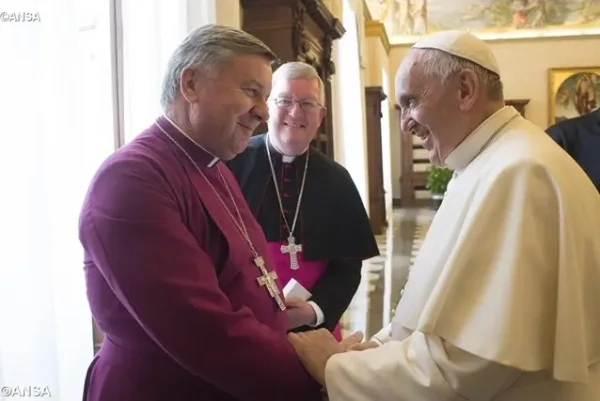
The fifth session of the Anglican-Roman Catholic International Commission concluded this week with a decision to hold next year’s meeting near the southern Canadian city of Toronto.
The group, known as ARCIC III, met at a retreat house south of Rome from April 28th to May 4th to discuss relations between local, regional and Universal Churches and how moral or ethical decisions are made within each tradition. The Anglican and Catholic scholars have also been reviewing the substantial progress made by earlier ARCIC groups and are preparing to publish commentary on five jointly agreed statements from the previous phases of the dialogue.
During an audience with the group on Thursday, Pope Francis said these discussions remind us that ecumenism is not a secondary element in the life of the Church and that the differences which divide us must never be seen as inevitable.
Following that audience, Philippa Hitchen caught up with the two co–presidents of ARCIC III, Anglican Archbishop David Moxon from New Zealand and the Catholic Archbishop of Birmingham in the UK, Bernard Longley …
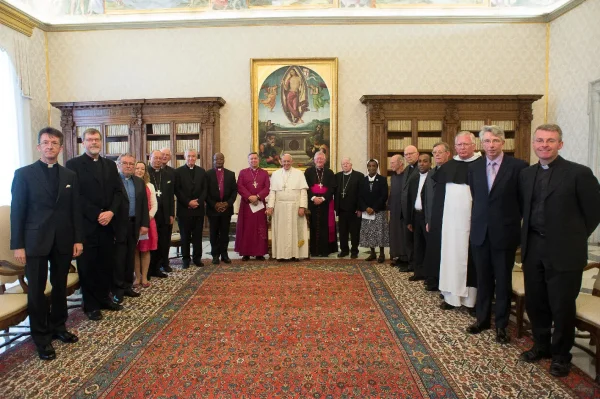
This morning Pope Francis received in audience twenty members of the Anglican-Roman Catholic International Commission, meeting in these days in order to study the relationship between the universal Church and the local Church, with particular reference to processes for discussions and decision making regarding moral and ethical questions. The Commission was created as a result of the historic meeting in 1966 between Pope Paul VI and the Archbishop of Canterbury, Arthur Michael Ramsey, who signed a joint declaration to establish dialogue based on the Gospel and the common tradition in the hope of leading to the unity in truth for which Christ prayed.
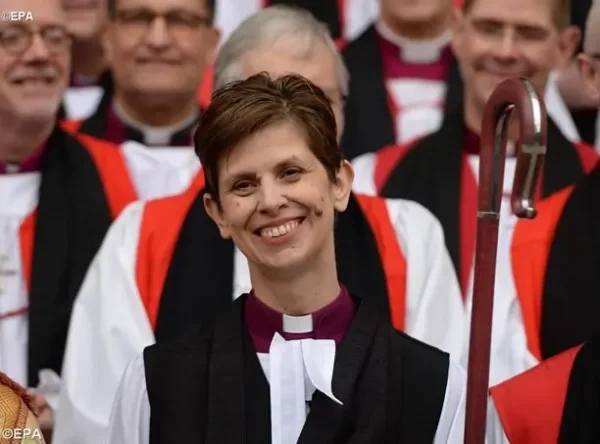
While the consecration of the Church of England‘s first woman bishop presents significant challenges in bringing Catholics and Anglicans into “closer communion,” ecumenical leaders say the door to dialogue remains open.
The consecration of Libby Lane as an Anglican bishop earlier this month creates a “further challenge to a hope of organic reunion”, said David Moxon, another Anglican bishop, in a Jan. 29 interview with CNA, reiterating concerns expressed by Archbishop Bernard Longley of Birmingham.
Moxon and Archbishop Longley are co–chairs of the Anglican-Roman Catholic International Commission (ARCIC), which aims to advance ecumenical relations between the Catholic Church and the Anglican Communion.
In a Jan. 27 interview with Vatican Radio, Archbishop Longley, acknowledging the challenges presented by Lane‘s Anglican episcopal consecration, stressed that it “shouldn‘t affect the way in which the dialogue is continued.”
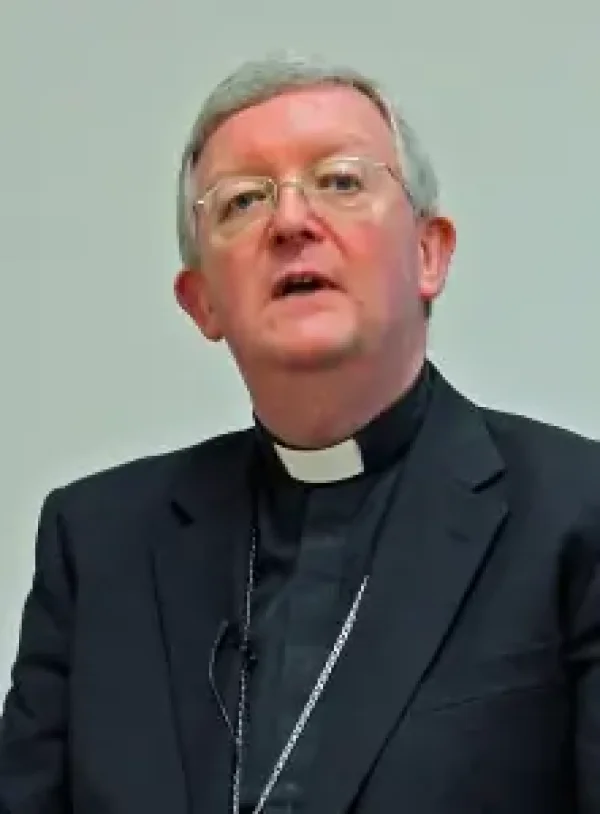
The Roman Catholic co–chair of the Third Anglican/Roman Catholic International Commission (ARCIC III) has expressed his personal view that, seeing how in 1993 certain relaxations were made in the Vatican’s rules on eucharistic sharing, further relaxation is possible. Speaking last week to the Gazette editor following a joint session of the National Advisers’ Committee on Ecumenism of the Irish (Roman Catholic) Episcopal Conference and representatives of the Church of Ireland’s Commission for Christian Unity and Dialogue, at St. Patrick’s College, Maynooth, the Most Rev. Bernard Longley — Roman Catholic Archbishop of Birmingham and ARCIC III co–chair — referred to the changes in “specified circumstances” set out in the 1993 Ecumenism Directory.
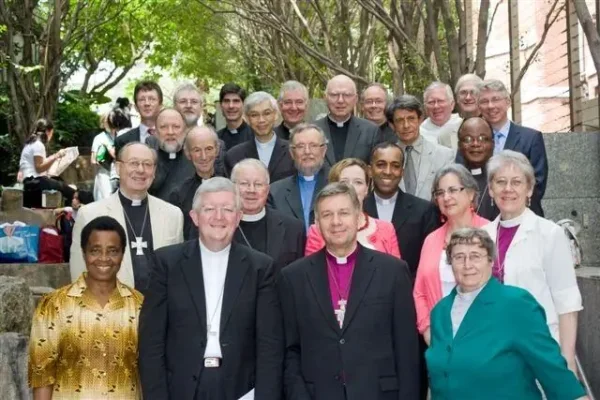
New Zealand Anglican Archbishop, David Moxon, says there seem to be many obstacles to fully visible Anglican Catholic union and it is unlikely to be achieved in the near future. He is the co–chairperson of the Anglican–Catholic International Commission (ARCIC) and was speaking at the Commission’s meeting in Hong Kong last week. “We can, however, do a lot of things together during this slow process,” he says.
The Catholic co–chairperson, Archbishop Bernard Longley of Birmingham, speaking before the meeting said,”I do understand those doubts, misgivings, and sometimes frustrations and disappointments particularly on the part of those people who have committed many years to dialogue and who at the outset thought the prospects of unity were much more realistic than they are now. New challenges, new obstacles have come in the way in the path of unity.
As the 4 to 10 May meeting of the Anglican-Roman Catholic International Commission (ARCIC) drew to a close, participants emphasized the importance of social witness and openness in ecumenical dialogue.
“There seem to be many obstacles from a human point of view, and it does not seem likely to have fully visible unity in the near future,” New Zealand Anglican Archbishop David Moxon, the co–chairperson of the meeting, said on May 8. “We can, however, do a lot of things together during this slow process,” he added.
“As we discussed in the meeting, there can be more collaborations between us, such as (humanitarian agencies) Caritas International and the Global Anglican Relief and Development Alliance,” he said.
Discernment of right ethical teaching was one of a number of issues on the table at the Anglican-Roman Catholic International Commission’s latest meeting in Hong Kong. The Commission is chaired by New Zealand’s Archbishop David Moxon and the Most Rev Bernard Longley (Roman Catholic Archbishop of Birmingham), and comprises 19 theologians from across the world. They have been meeting at the Mission to Seafarers in Kowloon. The agenda covered the Church as Communion, local and universal, and how in communion the local and universal Church comes to discern right ethical teaching.
The Commission has also been asked to present the documents of ARCIC II for reception by the relevant authorities of both communions. At this latest meeting, running from May 3–10, the Commission built upon the framework it had prepared at its first meeting. This seeks to address the interrelated ecclesiological and ethical questions of its mandate under four headings: the identity and mission of the Church; the patterning of the Church’s life that undergirds local and universal communion; shortcomings in the churches which obscure the glory of God; and ethical discernment and teaching.
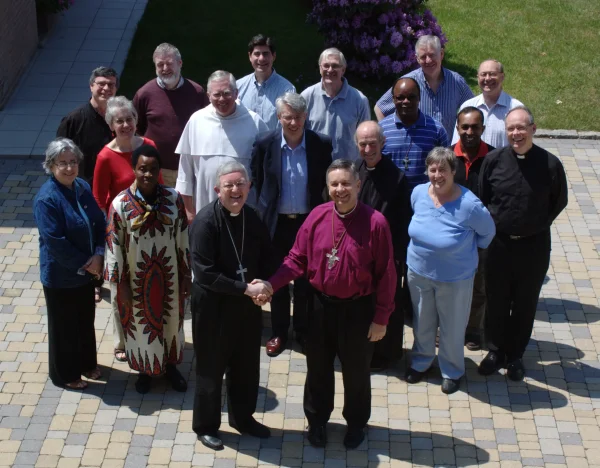
The third phase of ARCIC, or Anglican-Roman Catholic International Commission, started on Tuesday at the monastery of Bose in northern Italy. Nestled in the foothills of the Alps, the monastery, founded on the closing day of the Second Vatican Council in December 1965, is a haven of peaceful reflection and prayer, but also a place of important ecumenical encounters.
Within its secluded walls, the two teams of Catholic and Anglican experts are gathered from May 17th to 27th focusing on the theme ‘Church as Communion — local and universal.’ The discussions will look back at achievements of the previous ARCIC dialogues and explore pressing ethical issues that are challenging the teaching of both Churches.
The Anglican Roman Catholic International Commission is spending its first few days reviewing the work of the previous phases of work, particularly looking at what ARCIC I and II said about ecclesiology and ethics. It is doing this within a context of regular community prayer with the members of the Monastery of Bose. Biblical study of the Epistle to the Ephesians, led by the co–chairs, provides a biblical framework for the days‘ discussions.
Archbishop Bernard Longley the Co–Chairman of ARCIC III shares his thoughts and hopes for this important new ecumenical dialogue during an exclusive interview with Peter Jennings, his Press Secretary. The Archbishop of Birmingham travels to Bose, a monastery in northern Italy, today, Tuesday 17 May 2011, for the first meeting of ARCIC III.
What is ARCIC III and why was it set–up?
ARCIC III is the third phase of the international dialogue between the Anglican Communion and the Catholic Church. It originally began in response to the Second Vatican Council and as a result of the visit of the Archbishop of Canterbury, Dr Michael Ramsey, to Pope Paul VI in 1966. Archbishop Ramsey and Pope Paul issued a joint statement at that time speaking of “a new stage in the development of fraternal relations” and this vision has been a characteristic of the ARCIC dialogue every since. ARCIC III takes as its mandate the meeting between Pope Benedict XVI and Archbishop Rowan Williams in 2006 when they committed our two communions to continue the dialogue.
A joint statement by Catholics and Anglican scholars finds a surprising degree of agreement about the role and status of the Virgin Mary. But have they chosen to ignore some thorny issues? When Catholics hold interfaith dialogue with Muslims, one of the first topics to be discussed is the veneration given to the Virgin Mary in the two traditions. Teaching about Mary is seen as something that unites, rather than divides Catholicism and Islam; yet among Christians, the practices of Marian doctrine and devotion have generally been read as clear indicators of the differences between Catholics and Protestants. They have also, on occasion, signified the differences even between Catholics and Orthodox.
During Holy Weeek, one Anglican member of ARCIC sent the rest of us the poem, “Good Friday Falls on Lady Day” via email. The poet, G. Studdert Kennedy, also an Anglican, wrote:
She claims no crown from Christ apart
Who gave God life and limb
She only claims a broken heart
Because of Him.
I knew that the Feast of the Annunciation of the Lord would coincide with Good Friday this year, but I did not know the poem, and I was touched to receive it. In a way, this captures something special about the process of producing “Mary: Grace and Hope in Christ”.
Some of the liveliest debates at ARCIC meetings have been over titles. We worked together for five years on the “Mary document“, so we all have strong feelings about the progress we made and the best way to present it. “Put Mary in the title“, said one member, “and it will fly off the shelves.” “Put grace and hope in the title“, said another, “because that‘s how we have approached the two Marian dogmas.” “Put Christ in the title,” we all agreed, because again and again we reminded each other that the Church is interested in Mary because she is the mother of the Lord.
ARCIC does not set its own agenda. We worked on Mary because we were asked for “a study of Mary in the life and doctrine of the Church” and because of the acknowledged differences between our two communions over Mariological teaching.