Anglican-Roman Catholic Dialogue ~ IARCCUM.org
Online resource centre for Anglican-Roman Catholic relations
• 2026
• 2025
• 2024
• 2023
• 2022
• 2021
• 2020
• 2019
• 2018
• 2017
• 2016
• 2015
• 2014
• 2013
• 2012
• 2011
• 2010
• 2009
• 2008
• 2007
• 2006
• 2005
• 2004
• 2003
• 2002
• 2001
• 2000
• 1999
• 1998
• 1997
• 1996
• 1967
• 1966
 We invite you to visit our Bluesky feed, a new social media platform that replaces Twitter/X. Bluesky has reintroduced content moderation and eliminated advertizing. Follow us now on Bluesky.
Pope and Archbishop of Canterbury exchange letters on Archbishop Sarah’s Installation (26 Mar 2026)
Archbishop of Canterbury Sarah Mullally installed in service attended by Anglican Communion leaders (25 Mar 2026)
Belgian bishop plans to ordain married men to fulfil Synod vision (21 Mar 2026)
Gafcon to be led by new Global Anglican Council including clergy, laity, and bishops (6 Mar 2026)
IASCUFO shares learnings and supplement to The Nairobi-Cairo Proposals in preparation for ACC-19 (2 Mar 2026)
News & Opinion
• 2026
• 2025
• 2024
• 2023
• 2022
• 2021
• 2020
• 2019
• 2018
• 2017
• 2016
• 2015
• 2014
• 2013
• 2012
• 2011
• 2010
• 2009
• 2008
• 2007
• 2006
• 2005
• 2004
• 2003
• 2002
• 2001
• 2000
• 1999
• 1998
• 1997
• 1996
• 1967
• 1966
News & Opinion from the Anglican-Roman Catholic dialogues

Anglican and Catholic theologians, meeting in Toronto, Canada this week, have agreed on the publication of their first ARCIC III document on the theme “Towards a Church fully reconciled”. The volume, which is likely to be published in the autumn, uses the ‘Receptive Ecumenism’ approach to look at the limitations within each communion and see how one Church can help the other grow towards the fullness of faith. The third Anglican-Roman Catholic International Commission (ARCIC III) is holding its sixth annual meeting from May 11th to 19th, hosted by the Anglican sisters of St John the Divine in Toronto. The 18 members of the Commission have completed work on the first part of their mandate, exploring tensions between the local and Universal Church within the two communions, and are continuing discussions on a second volume, looking at how Anglicans and Catholics make difficult moral and ethical decisions.
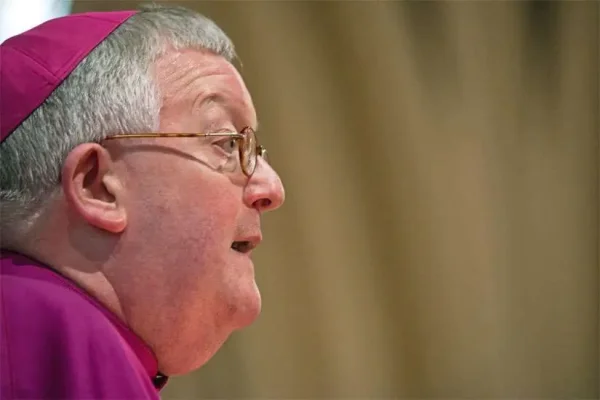
After nearly 50 years of discourse between the Catholic and Anglican communions, the official dialogue body wants to fine-tune how it studies the differences and similarities between two churches which both call themselves Catholic.
“ARCIC III hasn’t proved itself yet,” Sir David Moxon, Anglican co-chair of the Anglican-Roman Catholic International Commission, told The Catholic Register following an ecumenical evensong on Pentecost Sunday.
This third stage of the dialogue has been meeting since 2011, but has yet to publish a major document. It is currently studying how the Church arrives at moral teaching.
The official dialogue sponsored by the Vatican and the Archbishop of Canterbury is meeting in Toronto until May 18, when a concluding communique is expected from the meeting of 22 bishops, theologians and support staff. It is the first time the body has met in Canada and, to the knowledge of the participants, the first time in 50 years that ARCIC has met during Pentecost, when the Holy Spirit first revealed the global unity of the Christian message expressed in the diversity of languages from around the world.
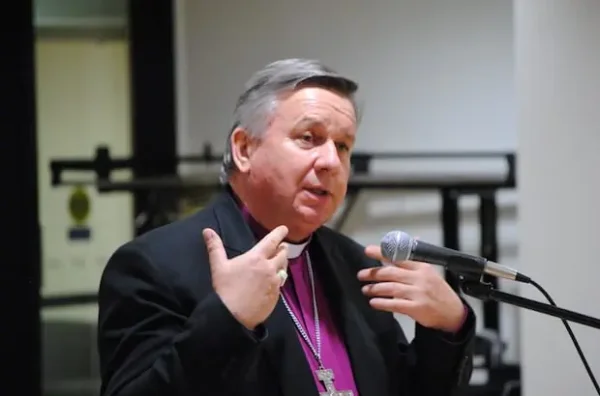
About 23 years ago, says Archbishop David Moxon of the Anglican Church in Aotearoa, New Zealand and Polynesia, he and the local Roman Catholic bishop made an agreement that still makes him feel hopeful. The two church heads decided to share the rite of imposition of ashes on Ash Wednesday – a tradition that continues in New Zealand today. Outstanding doctrinal differences prevent the Anglican and Roman Catholic churches from being able to actually take communion together. But Moxon, who is also the Anglican co-chair of the Anglican-Roman Catholic International Commission (ARCIC)-the two faith groups’ international ecumenical body-is encouraged about the prospect of ongoing dialogue. The relationships made between New Zealand Anglicans and Roman Catholics through sharing the Ash Wednesday rite, he says, led the two churches to spearhead a joint mission that involves nine Christian charities and serves about 7,000 people in the city of Hamilton, New Zealand.
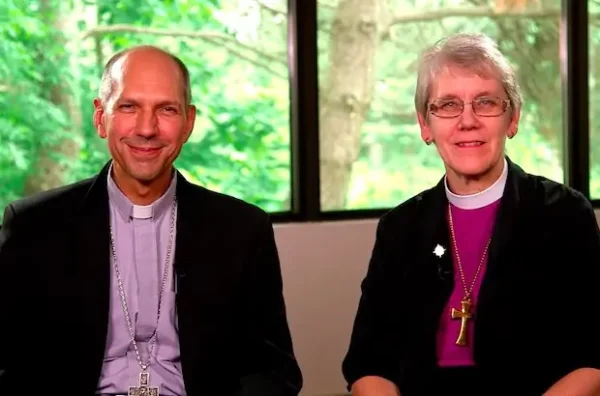
One of the most important and troubled projects from the Second Vatican Council arrives in Toronto May 11 for some serious, scholarly, and saintly talk.
The Anglican-Roman Catholic International Commission, better known as ARCIC, rolls into town to puzzle over how Catholics and Anglicans make decisions over ethical questions and to find new ways to sum up its work over the last five decades.
ARCIC is the official ecumenical dialogue between the world’s 85 million Anglicans and 1.3 billion Catholics set up by the Vatican and the Archbishop of Canterbury in 1969.
This is the first time ARCIC has met in Canada, and it gives Canada’s own Anglican-Catholic dialogue partners a chance to rub shoulders with their international counterparts.
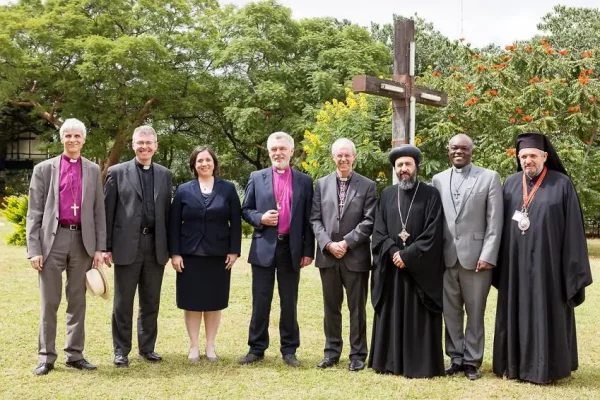
Affirmation of the Lutheran-Catholic agreement on justification and a call for Anglicans to commemorate the 2017 Reformation anniversary were among ecumenical resolutions adopted by the Anglican Consultative Council (ACC) at its recent meeting in Lusaka, Zambia. Bishop Dr Matti Repo of Tampere, Finland, who participated in the Anglican Communion’s governing body meeting in Lusaka, Zambia, mid-April says he was encouraged by the enthusiastic discussions on these issues “which both point to the grace of God and the free gift of salvation in Jesus Christ.” Repo was at the ACC as an ecumenical guest representing The Lutheran World Federation (LWF). He presented the call to affirm the substance of the Joint Declaration on the Doctrine of Justification (JDDJ), which was signed by the LWF and the Roman Catholic Church in 1999. The LWF was also asking Anglicans to recognize the significance of the 500th anniversary of the Reformation which will be observed next year.
Catholic and Anglican theologians have been meeting together near Rome to discuss ordination rites within the two communions, as well as the significant ecumenical implications of Pope Francis’ recent document ‘Amoris Laetitia’. A meeting of the Malines Conversation group took place from April 17th to 22nd at Rocca di Papa, south of Rome, culminating in an ecumenical evensong celebrated by Archbishop Arthur Roche of the Congregation for Divine Worship. A communique issued after the encounter said the theologians from seven different countries discussed “contemporary and historic ordination rites” and the developments that have taken place in both communions since Pope Leo XIII declared Anglican orders to be “null and void”.
A call for Anglicans to commemorate next year’s 500th anniversary of the Reformation and the commendation of a number of new inter-denominational agreements and reports were amongst a raft of ecumenical resolutions adopted by the Anglican Consultative Council when they met in Lusaka, Zambia, earlier this month. In Resolution 16.16, the ACC spoke of the “significance” of the 500th anniversary of the Reformation, and recommended that Anglicans should mark the anniversary by taking part in shared services, study, and mission activities with Lutherans and other ecumenical partners. The ACC also encouraged Anglicans to “engage with the Lutheran World Federation’s focus: Liberated by God’s Grace”. In a separate resolution – 16.17 – the ACC said that it “welcomes and affirms the substance” of the joint Lutheran and Roman Catholic Declaration on the Doctrine of Justification, which the two churches signed in 1999.
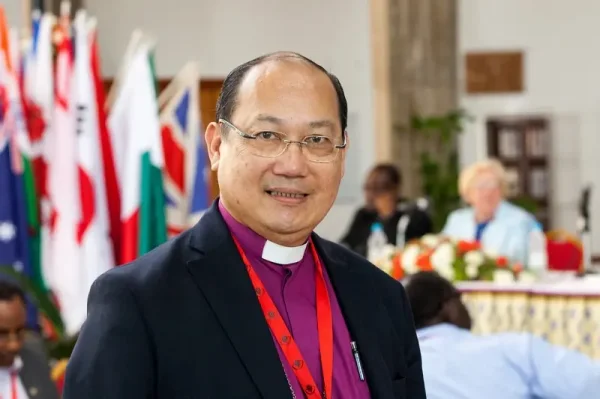
The archbishop and primate of Hong Kong, Rev. Dr Paul Kwong, has been elected as the new chair of the Anglican Consultative Council (ACC).
He is the first serving primate to be elected to the role.
Kwong received 40 votes. The runner-up, Prof. Joanildo Burity from Brazil, received 25 votes. Kwong will succeed Bishop James Tengatenga.
The ACC facilitates the cooperative work of the churches of the Anglican Communion, fostering the exchange of information between the provinces and churches. It also helps coordinate common action, advises on the organization and structures of the communion, and seeks to develop common policies with respect to the world mission of the church, including ecumenical matters.
The ACC meets every two or three years in different parts of the world. ACC-16 is taking place in Lusaka, Zambia on 8-19 April.
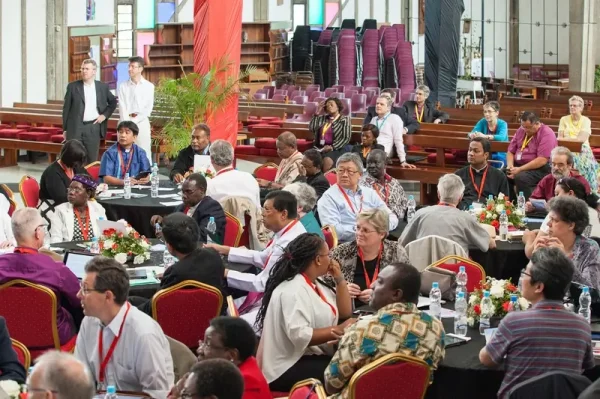
The Anglican Communion needs to be “aware of the great crises of our times,” the Archbishop of Canterbury, Justin Welby, has said in a presidential address to members of the Anglican Consultative Council (ACC) in Lusaka, Zambia.
“Because we are all over the world and because we are stretched and pulled by our differences, as we have looked at this week, the temptation is either to think only of internal questions, or of traditional issues, and not to realize that around us the world is shifting on its axis,” he said.
Sometimes the issues we face, even if they are not new, become acute in a new way and compel us to rethink how we work and how we apply the gifts given by God, Welby said in his 15 April address.
“Two actors dominate our world stage at present, I would argue,” said the archbishop.
“One is religiously motivated violence, and the other is climate change,” he said. “The world tends to forget, noted Welby, that “both characters can only be confronted with a theological and ideological approach and with a story, with a narrative, that is sufficiently powerful to overcome the natural selfishness of one generation, or the selfishness of countries which are more secure.”
Father Tony Currer, officer responsible for Anglican Relations at the Pontifical Council for Promoting Christian Unity (PCPCU), brought a message of greeting to all the participants of the 16th Anglican Consultative Council Meeting, in Lusaka (8 to 19 April) from His Eminence Cardinal Kurt Koch, President of the PCPCU.
Anglican, Roman Catholic and Methodist Churches in Aotearoa New Zealand are forming an ecumenical entity to pursue closer ties and share understandings. They held an inaugural meeting for the National Dialogue for Christian Unity (NDCU) on 25 February in Wellington.
Participants said they hope that the NDCU will lead to formal ecumenical collaboration among churches and other groups in society that want to work together on issues concerning all New Zealanders.
In addition to meeting during the day, participants attended a Service of Celebration at the Sacred Heart Cathedral in Wellington.
The formal establishment of the NDCU represents a significant and very hopeful development in ecumenical relationships in Aotearoa New Zealand, said Archbishop Philip Richardson, bishop of Taranaki and archbishop of the Anglican Church of Aotearoa, New Zealand and Polynesia. “Friendships between churches have been strong, so to give structure and form to these is cause for rejoicing.”
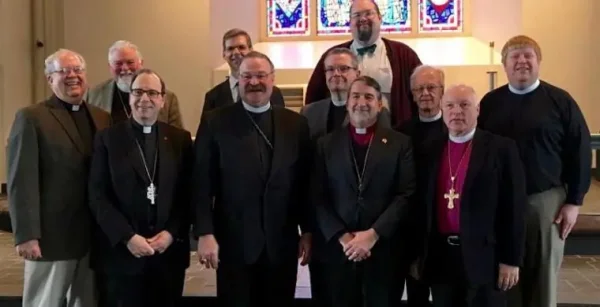
Participants in the Anglican Church in North America (ACNA), The Lutheran Church-Missouri Synod (LCMS), and Lutheran Church-Canada’s (LCC) ongoing ecumenical dialogue have released an interim report on their work so far. Entitled “On Closer Acquaintance,” the document is the culmination of six years of regular discussions between the three church bodies, and highlights the discovery of significant doctrinal agreement between the Anglican and Lutheran participants.
The authors are clear that there is still much work to be done before altar and pulpit fellowship between the two sides would be possible. Nevertheless, they have found the discussions promising enough to publicly declare their prayer “that, in the time and manner of His choosing, our Lord would grant each side in our conversations to acknowledge our ‘first cousin’ to be in fact a true sister church, with the result that we would welcome each other wholeheartedly to our respective altars and enjoy the blessed situation in which our clergy and people would be interchangeable with each other as we stand under the grace of God and work for His kingdom.”
In the meantime, they encourage all three church bodies to “consider the ways in which we can cooperate and come together in ways that fall short of full communion but do allow the greatest measure of cooperation while maintaining full theological integrity.”
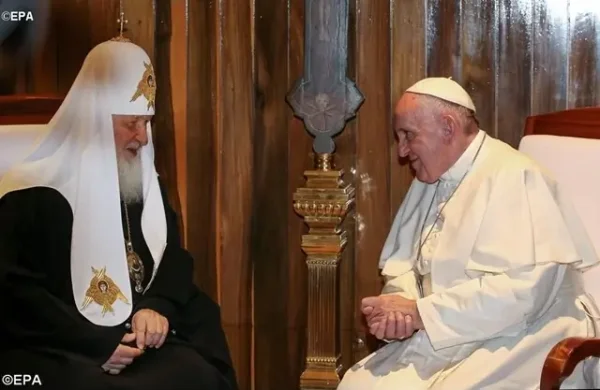
“The grace of the Lord Jesus Christ and the love of God the Father and the fellowship of the holy Spirit be with all of you” (2 Cor 13:13).
1. By God the Father’s will, from which all gifts come, in the name of our Lord Jesus Christ, and with the help of the Holy Spirit Consolator, we, Pope Francis and Kirill, Patriarch of Moscow and All Russia, have met today in Havana. We give thanks to God, glorified in the Trinity, for this meeting, the first in history.
It is with joy that we have met like brothers in the Christian faith who encounter one another “to speak face to face” (2 Jn 12), from heart to heart, to discuss the mutual relations between the Churches, the crucial problems of our faithful, and the outlook for the progress of human civilization.
2. Our fraternal meeting has taken place in Cuba, at the crossroads of North and South, East and West. It is from this island, the symbol of the hopes of the “New World” and the dramatic events of the history of the twentieth century, that we address our words to all the peoples of Latin America and of the other continents.
It is a source of joy that the Christian faith is growing here in a dynamic way. The powerful religious potential of Latin America, its centuries–old Christian tradition, grounded in the personal experience of millions of people, are the pledge of a great future for this region.
3. By meeting far from the longstanding disputes of the “Old World”, we experience with a particular sense of urgency the need for the shared labour of Catholics and Orthodox, who are called, with gentleness and respect, to give an explanation to the world of the hope in us (cf. 1 Pet 3:15).
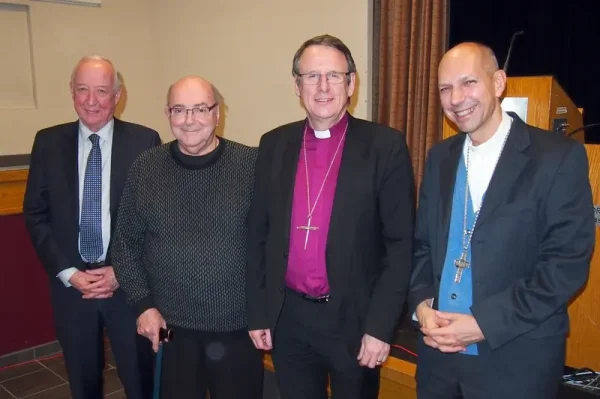
Anglican Bishop Kenneth Kearon used the image of constructing a barn to reflect upon the ecumenical movement during this year’s De Margerie Series on Christian Reconciliation and Unity, held in conjunction with the Week of Prayer for Christian Unity in Saskatoon.
In addition to a public lecture “On Building an Ecumenical Barn,” held at St. Thomas More College Jan. 21, the 2016 De Margerie series also included two workshops – one for clergy and ministry leaders Jan. 22, and another on Jan. 23 for the general public, entitled “Being Church in the World Today.”
Dr. Terry Downey, president of St. Thomas More College opened the public lecture at STM with words of welcome. Held in conjunction with the Week of Prayer for Christian Unity, the De Margerie series is jointly sponsored by STM, the Prairie Centre for Ecumenism, and the Roman Catholic Diocese of Saskatoon. This year’s lecture was available for the first time on live-streamed video (and is now posted on the diocese’s YouTube channel).
Nicholas Jesson, ecumenical officer for the Roman Catholic Diocese of Saskatoon, noted that the De Margerie series is named for local ecumenical pioneer, Rev. Bernard de Margerie, one of the founders of the Prairie Centre for Ecumenism in Saskatoon and its first director. De Margerie is also the author of In God’s Reconciling Grace, a book of prayers about Christian unity, reflecting his conviction that prayer and conversion must be at the heart of the ecumenical movement.
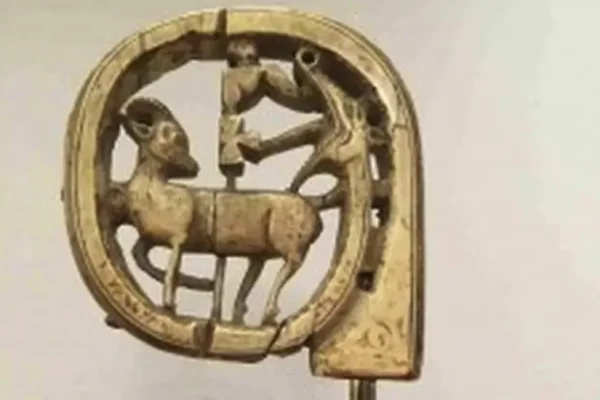
When the leaders of the 38 provinces of the Anglican Communion gather in Canterbury next week, they will have among them a visible sign of the long history of the English church.
The ivory head of a crozier associated with St. Gregory the Great, the pope who sent the first missionaries to England in the sixth century, has been loaned to Canterbury Cathedral by the Roman Catholic Church to coincide with the Primates’ Meeting, according to a report from the Primates’ Meeting website.
Canterbury Cathedral’s Dean, Robert Willis, said the cathedral was “very pleased to receive the crozier as a symbol of ecumenical encouragement at this time of the meeting of Anglican Primates.” He noted that it was “a link with St. Gregory, whose vision of the conversion of England caused Augustine to found the community at Canterbury.”
While the roots of Christianity in Britain go back to the time of the Roman Empire, subsequent invasions by Germanic tribes in the fifth century all but destroyed the church. In 597, Gregory sent Augustine, a Benedictine monk, to the court of the Anglo-Saxon King Æthelberht. Augustine became the first Archbishop of Canterbury, and the Church of England dates its formal foundation from the date of his arrival.
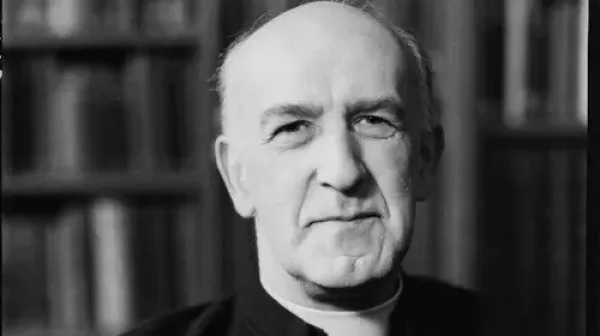
On December 2nd, 55 years ago, Pope John XXIII had a private audience with the Archbishop of Canterbury Geoffrey Fisher, the first time that Anglican and Catholic leaders had met together since the Reformation. Following their historic encounter, the archbishop met with Cardinal Augustin Bea, head of the newly established Secretariat for Christian Unity, leading to the invitation of Anglican observers to the Second Vatican Council. The meeting also paved the way for the first official encounter between their successors, Pope Paul VI and Archbishop Michael Ramsey in March 1966 and the establishment of an Anglican Centre here in Rome.
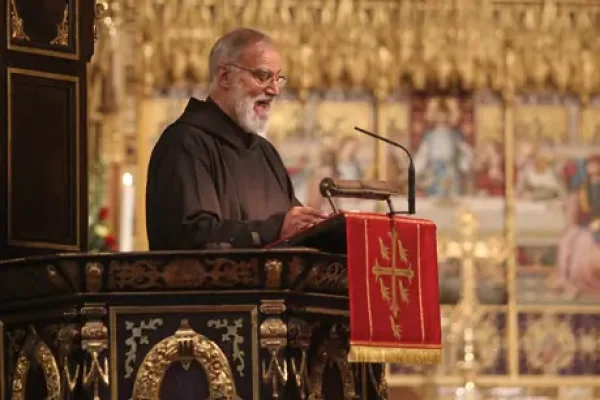
Few prophetic oracles in the Old Testament can be dated so precisely as that of Haggai, which we have just heard in the first reading. We can place it between August and December in the year 520 BC. The exiles, after the deportation to Babylon, have come back to rebuild the Temple in Jerusalem. They set to work, but soon grow discouraged, each preferring to work on his own house instead. Into this situation comes the prophet Haggai, sent by God with the message we have heard.
The Word of God, once it is proclaimed, remains forever alive; it transcends situations and centuries, each time casting new light. The situation deplored by the prophet is renewed in history each time we are so absorbed in the problems and interests of our own parish, diocese, community – and even of our particular Christian denomination – that we lose sight of the one house of God, which is the Church.
The prophecy of Haggai begins with a reproof, but ends, as we heard, with an exhortation and a grandiose promise: “Go up into the hills, fetch timber and rebuild the House, and I shall take pleasure in it and manifest my glory there” – says the Lord”.
One circumstance makes this point particularly relevant. The Christian world is preparing to celebrate the fifth centenary of the Protestant Reformation. It is vital for the whole Church that this opportunity is not wasted by people remaining prisoners of the past, trying to establish each other’s rights and wrongs. Rather, let us take a qualitative leap forward, like what happens when the sluice gates of a river or a canal enable ships to continue to navigate at a higher water level.
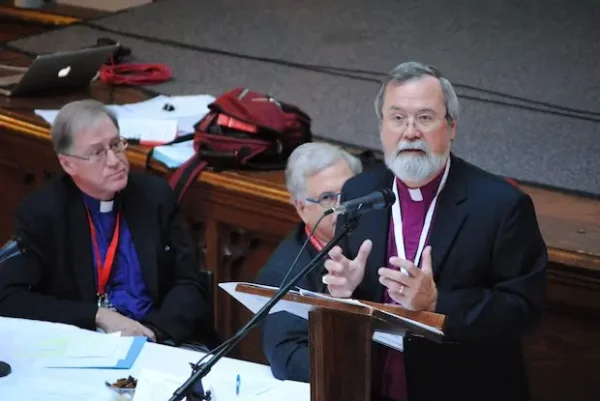
At their autumn meeting in Niagara Falls, Ont., members of the Anglican Church of Canada’s House of Bishops agreed to convene a special meeting from February 23-26 to discuss the report of the Commission on the Marriage Canon.
In a communiqué released October 26, the bishops said this meeting would “pay particular attention to the theology of marriage, the nature of episcopacy, and the synod’s legislative process” and “wrestle with how to honour our roles as guardians of the Church’s faith and discipline and signs of unity both locally and universally.”
The question of legislative process — how General Synod 2016 will approach the divisive vote on whether or not to allow same-sex marriage — has raised some anxiety among bishops, and was brought up in the communiqué.
“We are concerned that parliamentary procedure may not be the most helpful way to discern the mind of the Church, or of the Spirit, in this matter,” it stated. “We would ask those in charge of designing the process whereby the draft resolution comes to the floor…to consider ways in which trust and understanding can be deepened and promoted.”
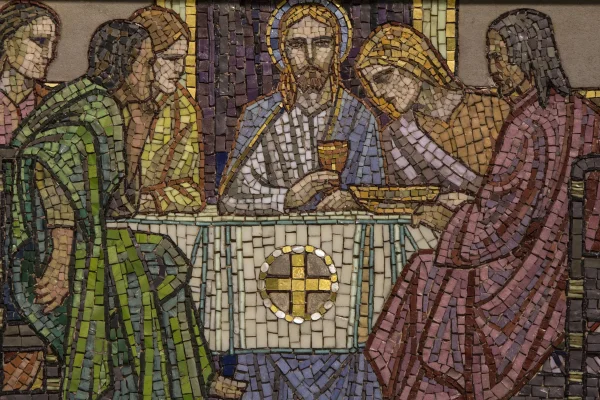
When the Anglican House of Bishops met in Niagara Falls, Ont., in mid-October, one of the first items on the agenda was the policy of authorized lay ministry adopted by the Evangelical Lutheran Church in Canada (ELCIC) during its National Convention this summer.
Sometimes called “lay presidency,” authorized lay ministry is a dispensation by which—in extraordinary circumstances—lay people can preside over services of the eucharist. While it can hardly be considered part of standard Lutheran practice, the convention voted in July to allow it in heavily circumscribed circumstances.
In an interview with the Anglican Journal, ELCIC National Bishop Susan Johnson said that the measures were brought in to meet a serious need.
“We find ourselves with occasional situations where it’s difficult and/or impossible to provide regular word and sacrament ministry,” she said, explaining that after considering a number of possibilities, including greater use of reserve sacraments and local ordination, authorized lay ministry was seen to be the “best compromise.”
Anglican and Vatican cricketers met for the second time in Rome today in a match that saw the Vatican team win.
This morning’s match was played at the Capanelle Ground in Rome, coinciding with the conclusion of the Roman Catholic Church’s Synod on the Family.
St Peter’s XI reached 147 for 6, the Archbishop’s XI were all out for 105 runs.
Last autumn, in a historic first match between Vatican and Anglican sides, the Archbishop’s XI narrowly triumphed with five balls to spare in a memorable showdown at Kent County Cricket Club ground in Canterbury.