Anglican-Roman Catholic Dialogue ~ IARCCUM.org
Online resource centre for Anglican-Roman Catholic relations
• 2026
• 2025
• 2024
• 2023
• 2022
• 2021
• 2020
• 2019
• 2018
• 2017
• 2016
• 2015
• 2014
• 2013
• 2012
• 2011
• 2010
• 2009
• 2008
• 2007
• 2006
• 2005
• 2004
• 2003
• 2002
• 2001
• 2000
• 1999
• 1998
• 1997
• 1996
• 1967
• 1966
 We invite you to visit our Bluesky feed, a new social media platform that replaces Twitter/X. Bluesky has reintroduced content moderation and eliminated advertizing. Follow us now on Bluesky.
Pope and Archbishop of Canterbury exchange letters on Archbishop Sarah’s Installation (26 Mar 2026)
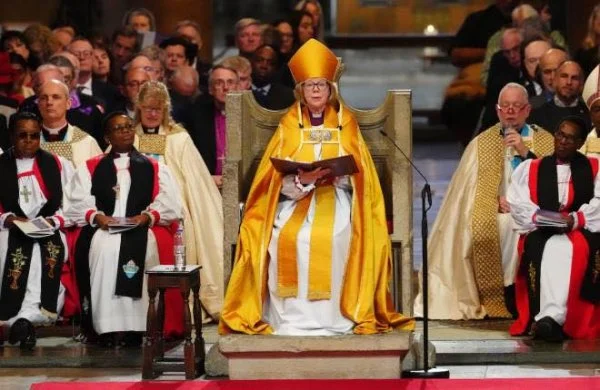
Archbishop of Canterbury Sarah Mullally installed in service attended by Anglican Communion leaders (25 Mar 2026)
Belgian bishop plans to ordain married men to fulfil Synod vision (21 Mar 2026)
Gafcon to be led by new Global Anglican Council including clergy, laity, and bishops (6 Mar 2026)
IASCUFO shares learnings and supplement to The Nairobi-Cairo Proposals in preparation for ACC-19 (2 Mar 2026)
News & Opinion
• 2026
• 2025
• 2024
• 2023
• 2022
• 2021
• 2020
• 2019
• 2018
• 2017
• 2016
• 2015
• 2014
• 2013
• 2012
• 2011
• 2010
• 2009
• 2008
• 2007
• 2006
• 2005
• 2004
• 2003
• 2002
• 2001
• 2000
• 1999
• 1998
• 1997
• 1996
• 1967
• 1966
News & Opinion from the Anglican-Roman Catholic dialogues
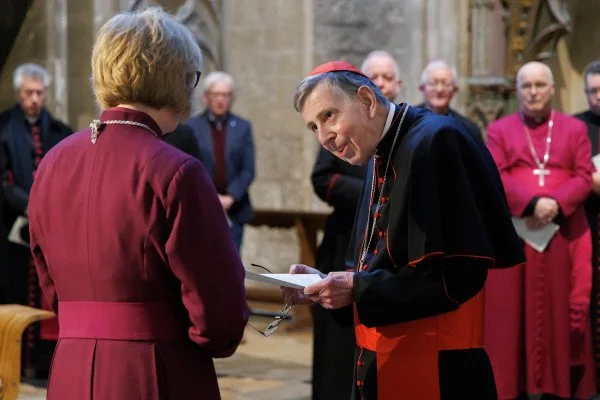
The Pope and the Archbishop of Canterbury have exchanged letters expressing their commitment to Christian unity and Anglican-Roman Catholic dialogue.
The greetings come as Lambeth Palace confirms today that Archbishop Sarah Mullally will visit Rome from 25 – 28th April. During the visit the Archbishop will meet with Pope Leo at the Vatican.
Pope Leo XIV wrote to Archbishop Sarah Mullally on the occasion of her Installation, which was held at Canterbury Cathedral yesterday. The Pope said he prayed she might “be guided by the Holy Spirit” and “draw inspiration from the example of Mary, the Mother of God.”
Archbishop of Canterbury Sarah Mullally was installed March 25 at a service at Canterbury Cathedral that was attended by leaders from across the Anglican Communion, including Presiding Bishop Sean Rowe and several other representatives from The Episcopal Church.
The ceremonial installation marks the start of Mullally’s public ministry. As the 106th archbishop of Canterbury and the first woman to hold that office, she acknowledged that history and her unlikely path to this moment in her sermon.
“I make this journey both on a personal level … but more significantly I make this journey with others and in the footsteps of the past,” she said, mentioning Thomas Becket, who served as archbishop of Canterbury 850 years ago. “Today, I think of the many thousand unknown Christians who have trodden these same paths since, and not just on this ancient land, but all across the world. People walk the pilgrim paths of faith each and every day.”
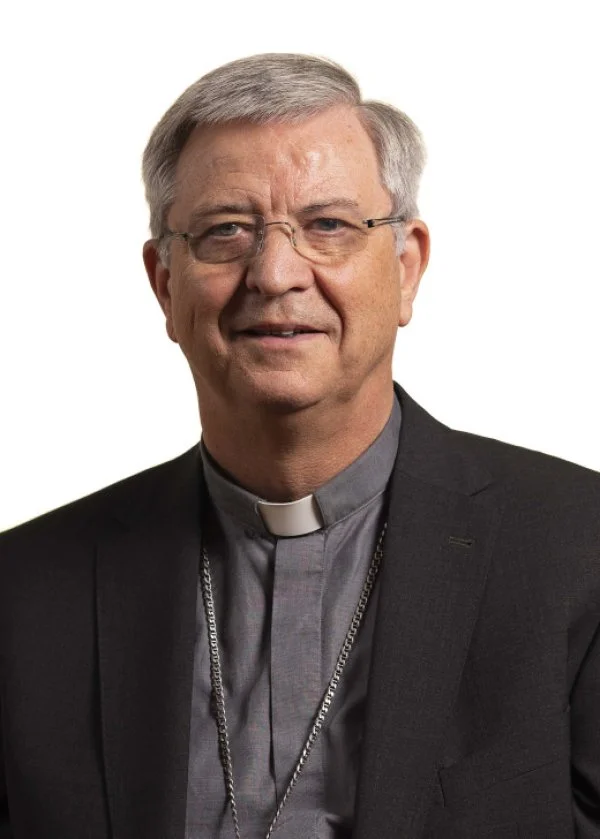
Bishop Johan Bonny of Antwerp has challenged Rome to push forward with synodal reforms by announcing changes including the ordination of married men in his diocese by 2028.
Carefully quoting guidelines for the Synod on Synodality’s implementation phase (2025-2028), his 11-page pastoral letter proposed the viri probati reform alongside the naming of woman pastors, a new understanding of parishes, welcoming new Catholics and updating the Church’s message.
In a communiqué marking what it says is a “historic day for the Global Anglican Communion”, Gafcon has announced that it has dissolved its Primates Council to replace it with a new Global Anglican Council, chaired by the Archbishop of Rwanda, Dr Laurent Mbanda.
It has made the “unprecedented” decision, it says, to “share its stewardship of the Global Anglican Communion by creating the Global Anglican Council, which includes primates, advisors, and guarantors, which will include bishops, clergy, and lay members, each with full voting privileges”.
The dissolving of the Primates Council, set up in 2008, reflects, the communiqué says, “the willingness of the Primates to share their authority with a wider group of global Anglican leaders, both lay and clergy”.
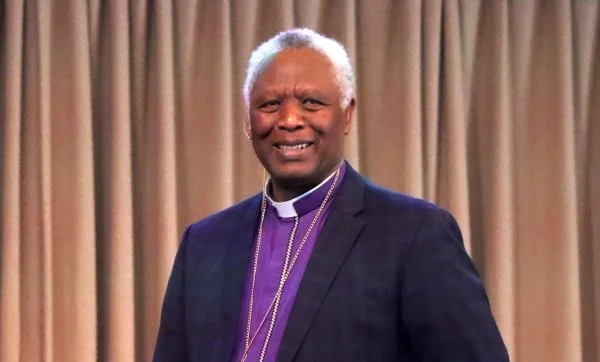
This June in Belfast, the 19th meeting of the Anglican Consultative Council will be invited to consider resolutions emerging from The Nairobi-Cairo Proposals and a Supplement Paper of the Inter-Anglican Standing Commission on Unity, Faith and Order (IASCUFO). Developed as an ‘offer’ to the Communion, the NCPs is a theological paper that offers a framework for fostering Christian unity and deepening communion amid difference. The proposals seek to encourage Anglican churches to ‘make room for one another’ and to recall their commitment to the unity and healing of the whole Church.
The Anglican Consultative Council facilitates the cooperative work of the member churches of the Anglican Communion in the areas of mission and unity. Every member church of the Anglican Communion is entitled to send 2-3 representatives to meetings, which include bishops, clergy and lay people.
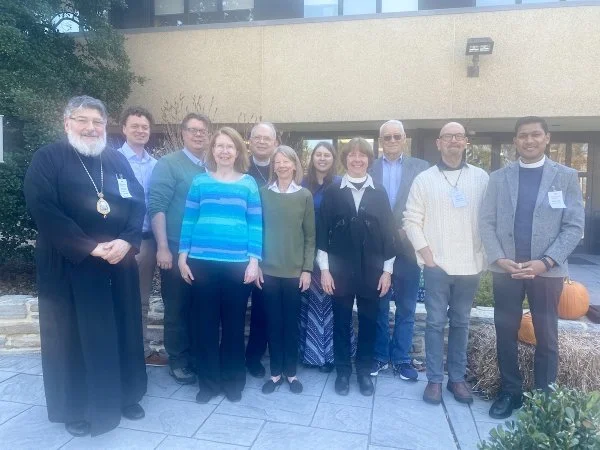
The 89th meeting of the Anglican-Roman Catholic Theological Consultation in the United States of America (ARCUSA) met at the Bon Secours Retreat and Conference Center in Marriottsville, Maryland, from Nov. 8-10, hosted by the secretariat for Ecumenical and Interreligious Affairs of the United States Conference of Catholic Bishops.
Against a background of communal worship, participants finalised a draft of a document on reconciliation, tentatively titled, “A Call to Reconciliation: A Joint Document from the Anglican-Roman Catholic USA Dialogue.” All members participated in a careful review of the entire document, providing final additions and edits. A final draft of this document on reconciliation will be presented in 2024 for approval by the General Convention of The Episcopal Church and the United States Conference of Catholic Bishops.
In addition, members participated in a liturgy of reconciliation intended for use as a rite for Episcopalians and Catholics. This liturgy is intended to be an appendix to the document as a sign of a common commitment to the ongoing work of reconciliation between Episcopalians and Catholics.
Gathering Anglicans from around the world, the 19th meeting of the Anglican Consultative Council (ACC-19) will take place in Belfast from June 27 – July 5, 2026. Themed ‘Called to One Hope’ from the letter to the Ephesians, this important international gathering of Anglican bishops, clergy and laity will explore how the Church can share the reconciling love of Christ in a fragmented world.
Supported by the Anglican Communion Office and hosted by the Church of Ireland, ACC-19 will also be the first official Anglican Communion meeting attended by the new Archbishop of Canterbury, the Most Revd and Rt Hon Sarah Mullally DBE.
The ACC facilitates the cooperative work of the member churches of the Anglican Communion in the areas of mission and unity. Its meetings include updates from member churches, reports from the commissions and networks of the Communion, and resolutions concerning shared priorities that the members of the ACC wish to address.
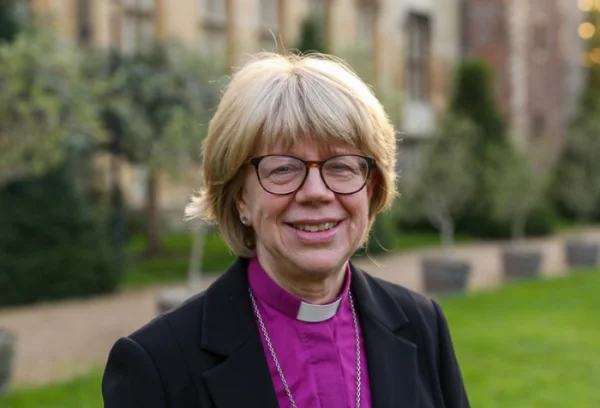
Dear Sisters and Brothers in Christ,
“Since it is by God’s mercy that we are engaged in this ministry, we do not lose heart.” 2 Corinthians 4:1.
Grace and peace to you.
It is a joy and a privilege as my time as Archbishop of Canterbury begins to write to the Bishops of the Anglican Communion.
At my Confirmation of Election in St Paul’s Cathedral, I was charged to work in partnership with my fellow Primates and Bishops of the Anglican Communion. I look forward to this shared ministry as we seek to be, not only disciples of our Lord Jesus Christ, but also his apostles, sent to share the good news of his love with all entrusted to our care. May the Lord be merciful to us and strengthen our hearts after the encouragement of the Apostle Paul.
What is the Catholic Church in England and Wales for, exactly? Some might insist existence is enough and no more needs to be said. When the Catholic Church taught extra ecclesiam nulla salus without qualification, that was clearly an imperative. But the Catechism now states: “Those who, through no fault of their own, do not know the Gospel of Christ or his Church, but who nevertheless seek God with a sincere heart, and, moved by grace, try in their actions to do his will as they know it through the dictates of their conscience – those too may achieve eternal salvation” (quoting Lumen Gentium, 16). Paradise is open to all people of sincere goodwill. So why be Catholic? It is not a question that has yet been fully answered.
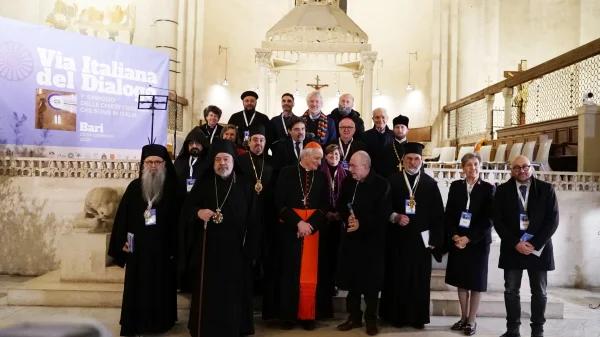
Strengthening relations among different Christian churches in Italy, while promoting authentic Christian values within an increasingly secular society. Those were the twin goals of a recent symposium, during which representatives of eighteen churches and Christian communities signed an ecumenical pact pledging to pursue dialogue, joint witness and closer cooperation for the common good.
As dean of the Evangelical Lutheran Church in Italy, Rev. Carsten Gerdes took part in the two-day symposium, held in the southern port city of Bari. The gathering included the signing of a bold new agreement between Catholic, Orthodox, Anglican, Protestant, Pentecostal and Free churches present around the Italian peninsula.
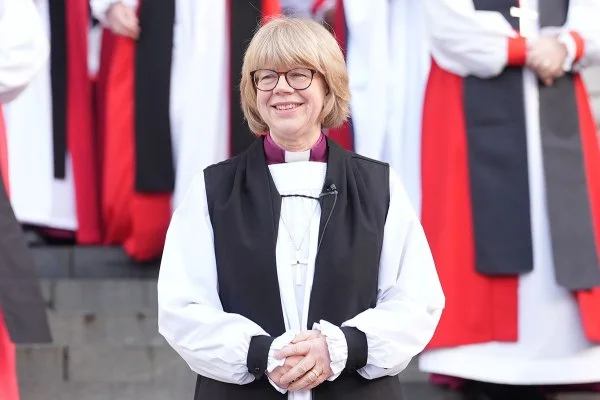
Sarah Mullally was confirmed archbishop of Canterbury Jan. 28 at St. Paul’s Cathedral in London, England. She became the first woman to hold the office in its 1,400-year history.
“It is an extraordinary and humbling privilege to have been called to be the 106th archbishop of Canterbury. In this country and around the world, Anglican churches bring healing and hope to their communities,” Mullally said ahead of her confirmation. “With God’s help, I will seek to guide Christ’s flock with calmness, consistency and compassion.”
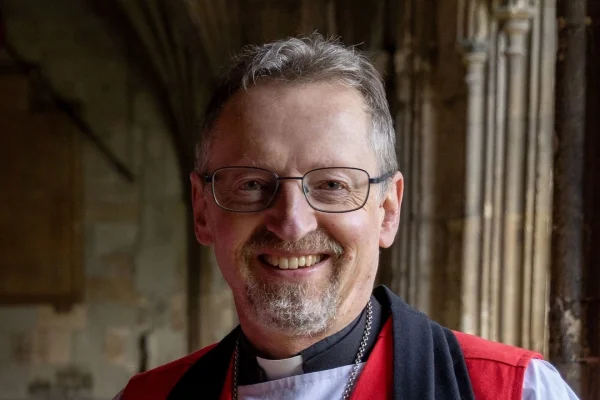
During the Week of Prayer for Christian Unity, the Rt Revd Dr Robert Innes shares a message of hope and offers a reflection on his involvement with the International Anglican Roman Catholic Commission for Unity and Mission (IARCCUM) and as Bishop of Gibraltar (Diocese in Europe).
Bishop Robert’s reflection:
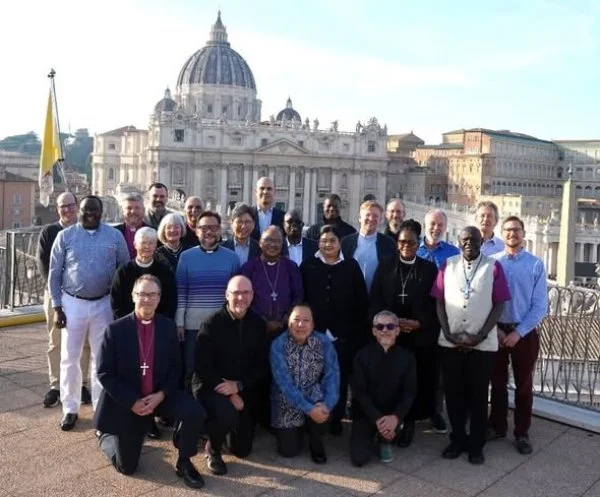
I am privileged to be the Anglican co-chair of IARCCUM, a sister commission of the Anglican-Roman Catholic International Commission (ARCIC). ARCIC does the hard work of articulating theological agreement. IARCCUM has the positive task of encouraging Anglicans and Roman Catholics to pray, work, learn and go out together in mission on the basis of the many things upon which we can joyfully agree. IARCCUM encourages spiritual ecumenism, the ecumenism of martyrs, the ecumenism of action and mission. It is about acting as if we were one so that we might become one.
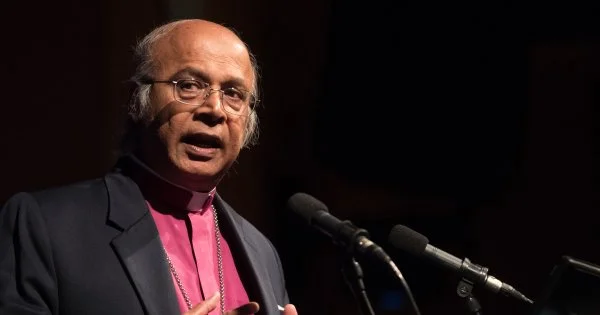
The Common Declaration of Pope Paul VI and Archbishop Michael Ramsey in 1966, together with the Malta Report (1968), set the agenda for the Anglican-Roman Catholic International Commission, of which I was a member for many years. This agenda was nothing less than the restoration of full communion in faith and sacramental life between the two traditions. Since then, ARCIC has produced a succession of agreements on Eucharist, Ministry, Authority, Salvation, Moral Teaching, and the Blessed Virgin Mary, matters which were seen as Church-dividing. In the year 2000, in spite of some new obstacles, Archbishop George Carey of Canterbury and Cardinal Cassidy of the Pontifical Council for Promoting Christian Unity were able to call a meeting of bishops to consider how to take forward, in practical terms, the remarkable agreements already reached by ARCIC. Thus was formed the International Anglican-Roman Catholic Commission on Unity and Mission, of which I was also a member.
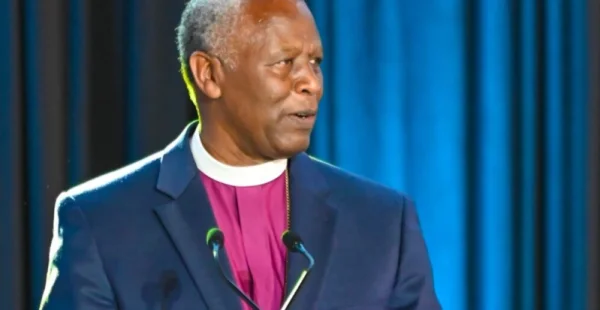
GAFCON, a conservative Anglican movement that claims to represent the majority of Anglicans worldwide, particularly in the Global South, is moving toward a formal reordering of global Anglican leadership following its October renunciation of the Archbishop of Canterbury’s authority.
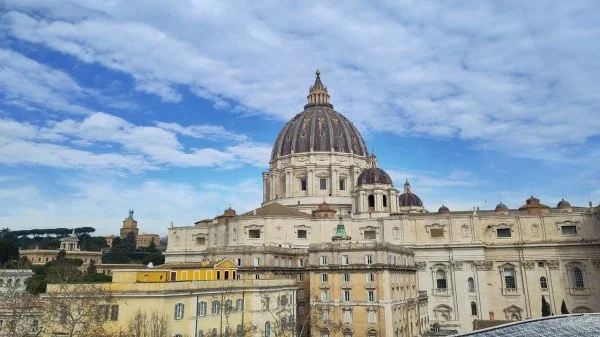
A report presenting the results of the Commission’s work has been released. It rules out admitting women to the diaconate understood as a degree of the sacrament of Holy Orders, but says that it is not currently possible “to formulate a definitive judgment, as in the case of priestly ordination.”
“The status quaestionis of historical research and theological investigation, as well as their mutual implications, rules out the possibility of moving in the direction of admitting women to the diaconate understood as a degree of the sacrament of Holy Orders. In light of Sacred Scripture, Tradition, and the Church’s Magisterium, this assessment is strongly maintained, although it does not at present allow for a definitive judgment to be formulated, as is the case with priestly ordination.”
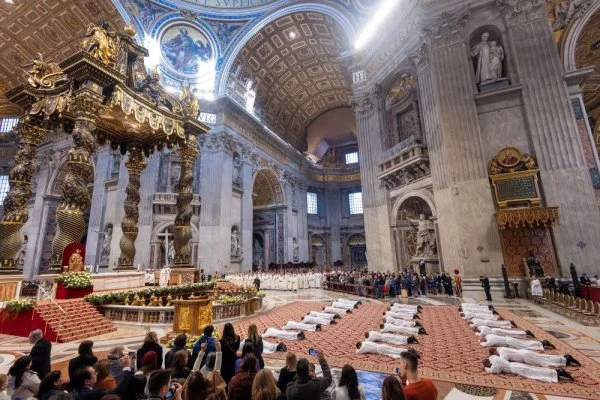
A Vatican commission studying the possibility of female deacons reported that the current state of historical and theological research “excludes the possibility of proceeding” toward admitting women to the diaconate, a conclusion that slows momentum on one of the church’s most debated questions while stopping short of a definitive no.
In a letter sharing the results of its work with Pope Leo XIV and released by the Vatican Dec. 4, the commission reported a 7-1 vote in favour of a statement concluding that the church cannot currently move toward admitting women to the third degree of holy orders, the diaconate.
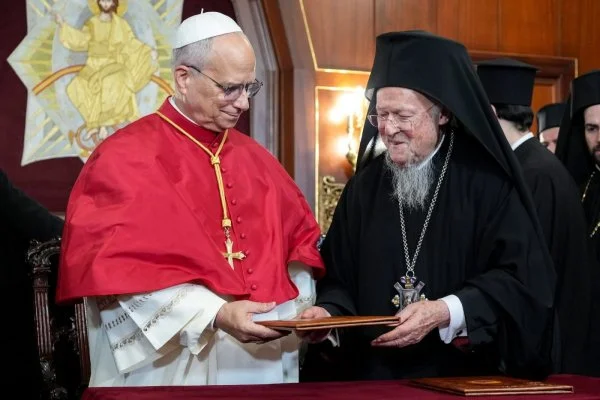
Pope Leo XIV and Ecumenical Patriarch Bartholomew of Constantinople called on Christians of the East and West to finally agree on a common date for Easter.
During a meeting at the patriarchal palace on 29 November, the two leaders — who met to celebrate the 1,700th anniversary of the Council of Nicaea — said the anniversary should inspire “new and courageous steps on the path toward unity,” including finding that common date.
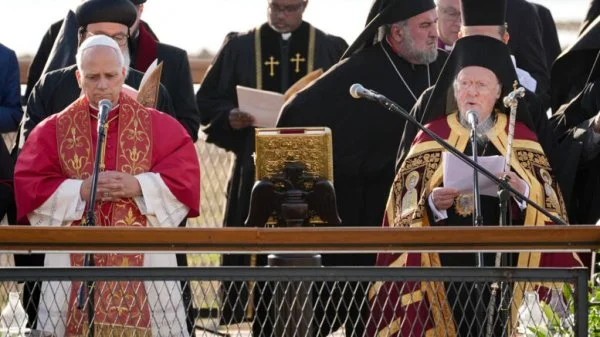
Although the ancient city of Nicaea lies in ruins and the geographic centre of Christianity has shifted West, Pope Leo XIV and Christian leaders gathered at an archaeological site in Türkiye to celebrate the enduring faith set out in the Nicene Creed.
Orthodox Ecumenical Patriarch Bartholomew of Constantinople hosted the ecumenical prayer service and the common recitation of the Creed Nov. 28 at Iznik, site of the ancient Nicaea, about 80 miles southeast of Istanbul.
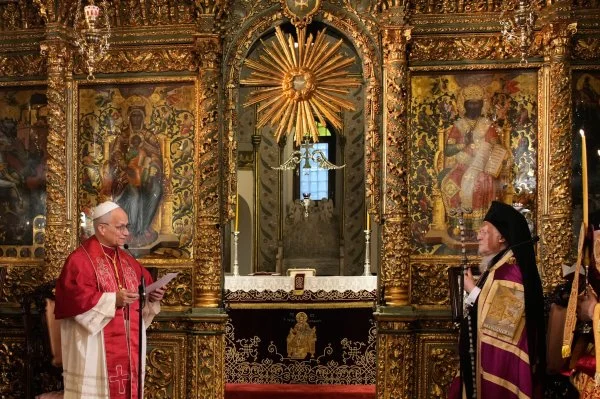
Pope Leo XIV and Ecumenical Patriarch Bartholomew of Constantinople met at the patriarchal seat in the ancient Phanar quarter on Saturday (Nov. 29) to sign a joint declaration affirming their commitment to achieving communion between the two churches.
“We continue to walk with firm determination on the path of dialogue, in love and truth, towards the hoped-for restoration of full communion between our sister Churches,” the declaration read.
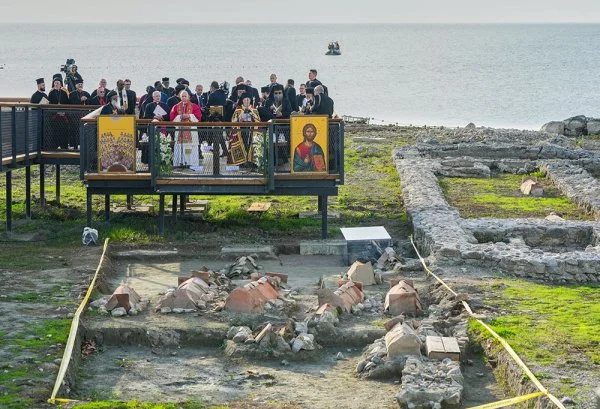
Seventeen centuries after bishops from East and West convened in Nicaea to craft the creed that defined Christianity, Pope Leo XIV returned to the ancient site with an appeal to “overcome the scandal of the divisions” that continue to fracture Christians today.
Marking the 1,700th anniversary of the Council of Nicaea — the centrepiece of his trip to Türkiye and Lebanon — the pope called on Christians the world over “to nurture the desire for unity for which the Lord Jesus prayed and gave his life.”
On his second day in Türkiye, he prayed alongside Ecumenical Patriarch Bartholomew, the spiritual leader of the world’s 300 million Orthodox Christians, on the shore of Lake Iznik — where the council that established a common creed for Christians convened 1,700 years ago.